 Red Storm Rising
TLDR: “A military masterpiece”
There are item(s) tagged with “tech” in this section.
See items tagged with “tech” across the entire site.
Red Storm Rising
 Laws of Software Engineering: A Guide to the Patterns that Shape Software Systems, Teams, and Decisions
 Jurassic Park
 Normal Accidents: Living with High-Risk Technologies.
“This was apparently a revolutionary book, back when it was published. It pushed back on the idea that industrial accidents were usually the fault of human error. It advaned the idea that in the world of connected systems, humans simply be expected to understand the ultimate ramifications of…”
 My Tiny Life: Crime and Passion in a Virtual World
 A Simple Guide to Retrieval Augmented Generation
“Here’s the bizarre thing about RAG: it basically flips what you thought you understood about AI on its head, and beckons you to understand it more accurately. LLMs are static things. They are trained at a point in time, and cannot be ‘updated’ in the sense that you’re probably thinking. An LLM…”
 Mastering Hallucination Control in LLMs: Techniques for Verification, Grounding, and Reliable AI Responses
 IBM: The Rise and Fall and Reinvention of a Global Icon
 The Book: The Ultimate Guide to Rebuilding Civilization
 Low Code Development with Mendix: Developing state of the art innovative apps at speed with the Mendix low code development platform
 Eloquent JavaScript
 Subprime Attention Crisis: Advertising and the Time Bomb at the Heart of the Internet
 Merchants of Culture: The Publishing Business in the Twenty-First Century
 Systems Ultra: Making Sense of Technology in a Complex World
 The Internet Con: How to Seize the Means of Computation
 Rebels Against the Future: The Luddites and Their War on the Industrial Revolution: Lessons for the Computer Age: Lessons for the Computer Age
 The Phoenix Project: A Novel about IT, DevOps, and Helping Your Business Win
 The New Automation Mindset: The Leadership Blueprint for the Era of AI-For-All
 Spam: A Shadow History of the Internet
 The Singularity Is Near: When Humans Transcend Biology
 The Engines of Our Ingenuity: An Engineer Looks at Technology and Culture
 To Engineer Is Human: The Role of Failure in Successful Design
 The Shallows: What the Internet Is Doing to Our Brains
 The Creativity Code: Art and Innovation in the Age of AI
“This book tries to answer the question: will AI ever be able to emulate human creativity? It never really answers the question, but it’s still very, very interesting. Each chapter covers a different type of creativity: writing, music, art, etc. It’s full of examples and anecdotes about the advances…”
 Cybertext: Perspectives on Ergodic Literature
“I’ve become interested in interactive fiction lately. I found an article about ergodic fiction, and when I defined that word, I found this book, in which the concept was apparently coined. It’s called Cybertext because the word cyber comes from a prefix refering to the control of systems. This in…”
 Hypermedia Systems
“I’ve used HTMX for a number of years (I currently use it on the very website this review was posted to). As such, this book is preaching to the choir quite a bit. Like a lot of situations with technology, the book exists on two levels: To evangelize the use of HTML (‘hypermedia’) to build…”
 Code: The Hidden Language of Computer Hardware and Software
“This book started so well, but then it got way more in-depth than I wanted to get, and it ultimately lost me. This is a book about how computers work. Literally how the computer thinks. The author starts off with basic codes, like Morse Code, explaining how more complex concepts can be made from…”
 Learning GraphQL: Declarative Data Fetching for Modern Web Apps
“This is a solid introduction to GraphQL. The problem is authors have is that GraphQL is a standard, not a technology. So they have to pick and choose how they demonstrate the concepts as opposed to an implementation of it. They do a good job – the chapters are clear, and they eventually move from…”
 What Technology Wants
“This is the second book I’ve read that sort of argues that technology is kind of its own life form. It ‘wants’ to advance, and humans are just the unwitting accomplices. This isn’t…bad. Meaning the book isn’t dystopian or doom and gloom or something. But is does speak to the idea that technology is…”
 To Save Everything, Click Here: The Folly of Technological Solutionism
“ Not sure what to do with this book. It’s basically a polemic against the idea that technology can save us from everything. The author is arguing that some solutions are to be found offline. I’m not sure what the point was, honestly. I got about halfway through it before I abandoned. ”
 Building Blocks of Tabletop Game Design: An Encyclopedia of Mechanisms
“This book was written by two board game experts, one of which is a professor at the NYU Game Center, which I didn’t even know was a thing. The book breaks down games into patterns – the ‘building blocks’ of the title. It groups them into categories: Game Structure Turn Order and Structure Actions…”
 Enchanted Objects: Innovation, Design, and The Future of Technology
“This is a book about making physical things…do stuff. In a digital world, we tend to think about tech in terms of bits and bytes, but there’s a bunch of physical things that are ‘smart’ as well. How do we move from smart things to ‘enchanted’ things. The author explains: This book is about how to…”
 Modular: The Web’s New Architecture and How It’s Changing Business
“This is a tough one to review because I’m very close to it – I know Sam, and he mentions me quite a bit in the book, including a lovely acknowledgment. That said, this book is…aspirational. It’s presenting a goal for how Sam wants the web to be. Sam makes claims in here about what’s happening on…”
 Reamde
“An absolutely fantastic novel. Very, very long, but it never slows down. It’s more Tom Clancy than cyberpunk. A MMOPRG does play a part in the plot, but it’s more about globe-hopping and gunfights than computers. You know how when you read about ransomware attacks from Asia, you think, ‘Man, I wish…”
 How the World Really Works: The Science Behind How We Got Here and Where We’re Going
“The author is a physicist, and he attempts to explain how the world really works, meaning what’s is utterly necessary for humans to survive as a species. For example, he explains why we need ammonia. Because we use it to make fertilizer ever since the Haber-Bosch process was established, and…”
 Building a Second Brain: A Proven Method to Organize Your Digital Life and Unlock Your Creative Potential
“Tiago Forte has been selling an online class with the same title as this book for years. I’ve always wanted to take it, but it was expensive and there’s always a waiting list. So, I was happy to get this book. Now, it’s a good book, but, honestly, this is ‘Getting Things Done’ by another name. And…”
 The Cold Start Problem
“This is one of those books that I feel like you should read in a group. You should study discuss every chapter. There’s just so much here. The book is about products that require ‘network effects’ to work. Network effects is the concept that some things need more than one person using them to be of…”
 Just Enough Research
 A/B Testing: The Most Powerful Way to Turn Clicks Into Customers
“A good overall discussion of A/B testing. More strategic than tactical – this is a book to convince executives to try experimentation, not for marketers to apply it. (Disclaimer: it was written by the founder of Optimizely, which is sort of the company I work for now. We acquired them, then took…”
 Beginning Ethereum Smart Contracts Programming: With Examples in Python, Solidity, and JavaScript
“On the plus side, this book had a good explanation of blockchain in the beginning. It also explains the basics of Smart Contracts. But it’s essentially a user manual for a bunch of software tools. A lot of the book is screenshots of UIs. It was hard to ‘zoom out’ and get a longer view of what the…”
 Kill It with Fire: Manage Aging Computer Systems (and Future Proof Modern Ones)
“Not what I expected. I thought I was getting a technical book with literal strategies for managing and migrating legacy systems. Instead, the book spends a lot of time on organizational politics, change planning, and even developer psychology. I’m not saying this is wrong (the author clearly knows…”
 Cult of the Dead Cow: How the Original Hacking Supergroup Might Just Save the World
“The Cult of the Dead Cow was an early hacker group, formed in the 1980s. This book tells its story over the years and where everyone ended up. It’s…scattered. There are a lot of people, and the scope is large. The book is essentially trying to follow a fractured group of people over 40-some-odd…”
 We Are Bellingcat: Global Crime, Online Sleuths, and the Bold Future of News
“Bellingcat is a ‘open source intelligence’ cooperative. It’s a group of people who surf the internet to find evidence of crimes. They made their name during the Syrian conflict. They would scour uploaded videos and compare them to Google Maps to find where they were taken. In doing so, they were…”
 Art of Atari
“This is a fun book that celebrates the packaging and advertising art of the early Atari video games of the 80s. And this is important, because – let’s face it – those games sucked . The graphics were horrible and abstract, and what you were seeing on the screen had very little relation to…the…”
 Indistractable: How to Control Your Attention and Choose Your Life
“This was recommended, but I didn’t love it. It’s a ‘cookbook’ of sorts – each chapter is a short ‘hack’ to try to keep your attention span on track. There’s nothing new here. You’ve probably seen all these before. The author does try to fit everything into a four point framework. Master internal…”
 The Grid: Electrical Infrastructure for a New Era
“This is a well-researched book, but seems disorganized. It felt like it jumped around a lot, especially between scopes – from macro to micro. The major points I learned: Electricity is unlike any other resource in that it’s not a storable thing. When you use it, it was generated a fraction of a…”
 Philosophical Engineering: Toward a Philosophy of the Web
“I tried to understand this, but it went so, so far over my head. I’ve been working on the web for 25 years. I have a minor in philosophy. Neither of those things helped. I got about halfway through it before giving up. It’s dense , man. I feel badly for not sticking it out, but at the end, I was…”
 Business @ the Speed of Thought: Succeeding in the Digital Economy
“This is Gate’s second book, four years after ‘The Road Ahead…’ Like that book, it’s an exercise in vision-casting, though it’s directed to business leaders and how the internet is going to change business. Each chapter covers a different aspect of business, and ends with a checklist of major…”
 Refactoring: Improving the Design of Existing Code
“This is one of the great books of computer science. As the title would imply, it’s about fixing the internals of computer programs, without changing how the program functions from the ‘outside.’ This is a time-honored task in computer science – programs get all twisted and crufty over time as…”
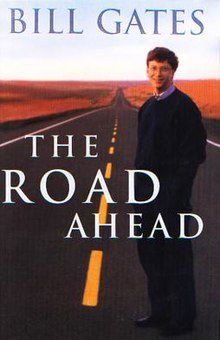 The Road Ahead
“This book was written 25 years ago, in 1995, right on the cusp of the Internet as we know it today. Bill Gates was the CEO of Microsoft at the time, and this book was really meant to be an look at the exciting things that we coming in the future. It’s chapter after chapter about how the…”
 Product Leadership: How Top Product Managers Launch Awesome Products and Build Successful Teams
“I struggled to get into this. It’s very high-level/top-down. More about the strategy of building a product team than about the practical nuts and bolts of doing the job. There’s a lot about building a team and interviewing people, and lots of interviews and quotes from people in the industry. If…”
 Sandworm: A New Era of Cyberwar and the Hunt for the Kremlin’s Most Dangerous Hackers
“This is a story of a bunch of hacks, which the author has strung together. The claim is that NotPetya, WannaCry, the Korean Olympic hack, etc. were all the work of the same organization – a Russian GRU hacking group nicknamed ‘Sandworm’ (the name came from the book ‘Dune,’ from which there were…”
 Artificial Intelligence: A Guide for Thinking Humans
“A good primer to the field. Hits the right depth between technical and theoretical layers, including quite a bit on ethics. My takeaway is that we’re really, really far away from anything approaching what we think artificial intelligence was going to be. The key is that there’s a difference between…”
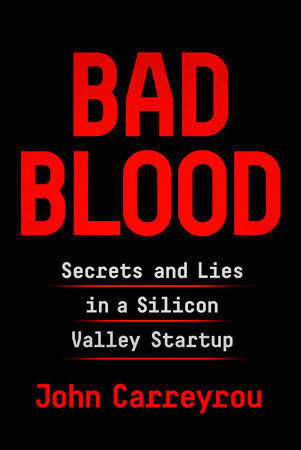 Bad Blood: Secrets and Lies in a Silicon Valley Startup
“An appalling, infuriating book about shocking hubris and dishonesty. The fact that Theranos managed to perpetuate their fraud as long as they did is frankly a little amazing. And all these people who so vigorously defended the company and denigrated its detractors simply HAD to know there was a…”
 Digital Methods
“This book offers up the premise that the Internet has enabled new methods of original research (new ‘digital methods’) that didn’t exist before. Things like link analysis, search engine indexing analysis, and site crawling analysis. Some of it is interesting, like an extended comparison of the…”
 The New Edge in Knowledge: How Knowledge Management Is Changing the Way We Do Business
“I was going to rate this book even lower, because it was just stratospheric in scope – it was so high-level as to be basically useless. There was just nothing at all tactical here; it was full of generalities that, honestly, seemed a little obvious. Additionally, the book seemed like a long…”
 The Demon in the Machine: How Hidden Webs of Information Are Solving the Mystery of Life
“This is not a book for the casual reader. A lot of this went over my head, but I managed to maintain a loose grip on it until the end. Essentially, the author is arguing for the inclusion of information science along with physics, chemistry, and biology as the disciplines that deal with the origins…”
 The Victorian Internet: The Remarkable Story of the Telegraph and the Nineteenth Century’s On-line Pioneers
“A wonderful history of the telegraph which proves that all of the ‘novel’ problems the Internet brought about actually happened 150 years earlier. Standage pays special attention to the societal changes that the telegraph wrought, and the effect it had on the lives of the telegraph operators who…”
 Future Histories: What Ada Lovelace, Tom Paine, and the Paris Commune Can Teach Us About Digital Technology
“I have no idea why I bought this book. Honestly, I don’t even remember buying it. The book is a … call (?) to a new future. I think the title refers to events in the past that resemble current events, or how our future should turn out. I know that sounds confusing. However, I can’t categorize the…”
 Practical Recommender Systems
“Not rating this one, because I wasn’t really the right audience for it. I wanted an introduction to recommender system theory, and what I got was … a lot of math. This is a programming manual, with code samples in Python. There is some theory here, certainly, but there’s no getting away from the…”
 Designing Bots: Creating Conversational Experiences
“The key to this book is to note that it’s called ‘DESIGNING bots,’ not ‘DEVELOPING bots.’ This book is about all the planning and forethought that goes into create a bot in the generic sense (though, the author works at Slack). It’s about branding, personality, conversation flows, etc. It has…”
 The Age of Intent: Using Artificial Intelligence to Deliver a Superior Customer Experience
“An okay overview. I think I was looking for more of an in-depth title that got down into specifics of how a chatbot services might work, but perhaps that’s a different book. This is a very promotional title, written by a guy who runs a firm that consults on these things. It’s clearly trying to…”
 The Soul of a New Machine
“Honestly, I just didn’t get it. This book was described in near-mythical terms, but it seemed tedious to me. Maybe I’m just not used to hardware design, or I’m not an engineer anymore – I don’t know what, but the over-arching point of this was lost. There was some philosophy toward the end of…”
 A People’s History of Computing in the United States
“I didn’t finish this book. I got through 3-4 chapters, then skimmed the rest. I couldn’t figure out what it wanted to be. The author compared to to Howard Zinn’s book of similar name, but I couldn’t see it. The book seemed to be very specific vignettes about the early age of computing in the 60s….”
 Platform Revolution: How Networked Markets Are Transforming the Economy – and How to Make Them Work for You
“A book about the rise of ‘platforms’ – systems that don’t do anything except connect other people. Think AirBnB, Facebook, Uber, etc. A good look at all the challenges, especially things like network effects, how to get people on the platform to start with, and how to keep them on the platform over…”
 You Don’t Know JS: this & Object Prototypes
“Deeply opinionated book that is violently opposed to the use of JS as an object-oriented language. It’s well-written, and has clear information and code samples, but the author is pushing an agenda which gets a little tiresome. I felt like I had to decide: do I believe the entire design team behind…”
 CSS: The Definitive Guide
“An absolutely magisterial work that explores every last corner of the CSS spec. The advancements that have come along since I learned CSS are amazing – you can almost write executable code in CSS now. This book explores every edge case, no matter absurd, to probe every last corner of the spec. I…”
 Data Driven: Harnessing Data and AI to Reinvent Customer Engagement
“An okay book which reveals how high-end digital marketing works. It was written by some guys that went to work for Salesforce when it acquired their company. This is not how you or me do marketing – this is how huge brands like Johnson and Johnson and General Motors do marketing. You know all that…”
 We Are The Nerds: The Birth and Tumultuous Life of Reddit, the Internet’s Culture Laboratory
“Wonderfully complete history of Reddit, from the childhood lives of founders Alexis Ohanian and Steve Huffman, through the (ultimately tragic) life of Aaron Swartz. The book has short chapters, and is mainly episodic – each chapter covers some moment in the history of Reddit, and they’re all there:…”
 How the Internet Happened: From Netscape to the iPhone
“This is a fun book, but I take exception with the first half of the title – this is not ‘how the internet happened,’ which explains the qualifier ‘from Netscape to the iPhone.’ This is really about 13 years in the history of the web, mainly. ‘The Internet’ dates to the 50s or the 60s, but this is a…”
 Legion versus Phalanx
“I struggled with this book. The author admits that it’s about almost everything except a direct comparison of the legion and the phalanx. After a short introduction to ancient military tactics, it pretty quickly launches into a long history of ancient warfare and battles. About halfway through…”
 Bitwise: A Life in Code
“The book is weird. It’s not about ‘code,’ really. It’s about human representation in code. It’s really about how humans relate to code, and about how humans are represented as code. Two chapters in the middle are representative, and neither have anything to do with code – One discussed the…”
 The Seventh Sense: Power, Fortune, and Survival in the Age of Networks
“The basic concept here is that ‘networks’ are the Next Big Thing. Everything in the world is interconnected, and ‘the seventh sense’ is our ability to sense those connections, and think in terms of networks, rather than just isolated things. I think. It’s tough to tell. First of all, the author was…”
 Creating Things That Matter: The Art and Science of Innovations That Last
“I really wanted to ‘get’ this book…but I didn’t. The text didn’t live up to the title – I came away from it no more prepared to create a ‘thing that matters.’ The author purports to explain ‘aesthetic creation,’ which sounds great, but it never really got explained. A lot of the book was examples…”
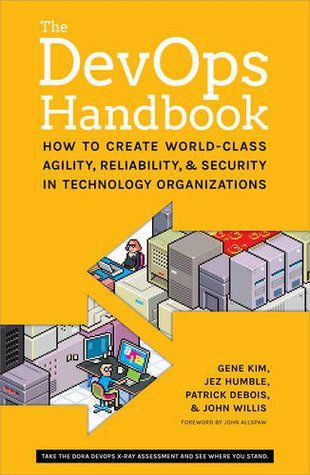 The DevOps Handbook: How to Create World-Class Agility, Reliability, and Security in Technology Organizations
“A very complete look at all the steps necessary to manage devops in a software shop. Some of it was lost on me, because it’s exactly what it purported to be: a comprehensive review of everything you might do to manage the process of releasing and supporting software. Of interest was some emphasis…”
 Building Evolutionary Architectures: Support Constant Change
“ A complicated book about how to architect systems that grow and change over time. Lots of detail, very theoretical, and sometimes hard to digest. ”
 Conceptual Models: Core to Good Design
“ I was left wondering if I was the right audience. A lot of it felt pretty obvious, but I’ve been doing diagrams like this for a while. I endorse the theme of the book - we need to diagram mental models before we start talking about UI and writing code. ”
 Overcomplicated: Technology at the Limits of Comprehension
“ A short but wonderful book about how we perceive complex systems and some techniques for understanding them better. ”
 The Way of the Web Tester: Reduce Bugs, Increase Quality, Have Fun
“ This wasn’t for me. I missed the word ‘beginner’ in the subtitle. There are chapters explaining the basics of HTTP. And of programming in general. Also, it’s full of cutesy drawings and…stuff. This is good book for the right audience. I just wasn’t it. ”
 Blockchain Revolution: How the Technology Behind Bitcoin Is Changing Money, Business, and the World
“This is NOT a technical book. It’s more about the larger societal and business implications of blockchain – like, how the world will change because blockchain exists. However, the book might have done well with some more technical information. The most frustrating phrase is ‘on the blockchain.’ The…”
 Node.js 8 the Right Way: Practical, Server-Side JavaScript That Scales
 Learning Node: Moving to the Server-Side
 Node.js in Action
 Instant Npm
“ Very short, solid book that delivers exactly what it claims. It covers npm well, concisely, and to-the-point. I learned a lot without a ton of overhead. ”
 Angel: How to Invest in Technology Startups
“Fantastic overview of the VC/angel process. Even if you’re on the other side – so, not investing, but looking at taking investment money – it gives you a good understanding of the entire process. If you do want to become an investor, the book is a little silly. It assumes you have hundreds of…”
 Learning React: Functional Web Development with React and Redux
“This is a solid overview of React. Good examples, but like most coding books, they get long. Also, ‘React’ isn’t just one thing – it’s an entire stack of technologies that work together, and this book seems to cover them all. Well-written, clear. (I find technical books hard to assign star ratings…”
 Designing Connected Content: Plan and Model Digital Products for Today and Tomorrow (Voices That Matter)
“Fantastic look at content technology from a content-centric standpoint. If you have no idea about how to structure your content and get it under management, this is your book. If you’re an experienced content management practitioner, you might not get much out of it, except for a burning desire to…”
 Eleanor Oliphant Is Completely Fine
“Wonderful novel about a woman who has pushed the world away due to trauma in her past, and who has to rejoin mainstream society in order to confront her demons. This is normally way outside my area of interest, but I read it for a book club and I’m quite glad a did. It’s always interesting, and…”
 Java Pocket Guide: Instant Help for Java Programmers
“Exactly what the title says – it’s a very short, concise guide to the Java language. It’s especially helpful for developers of other languages who want to see how things are done in Java. I read it over the course of a day – kept it in my back pocket while I walked around the Mall of America. I’d…”
 The Art of SaaS
“An extremely short book that’s almost militant in its espousal of the SaaS mindset. It works as a sort of primer for people used to some other paradigm of software delivery to ‘re-program’ them into a SaaS perspective. It covers everything (very briefly and superficially) from development cycles to…”
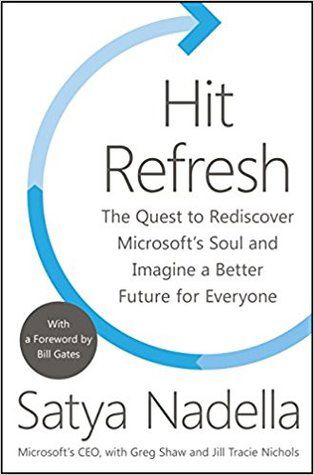 Hit Refresh: The Quest to Rediscover Microsoft’s Soul and Imagine a Better Future for Everyone
“I didn’t quite know what to make of this book. I couldn’t really figure out the point. It seems to be equal parts a reflection on Nadella’s first 2-3 years as Microsoft CEO, and a look to the future of computing. Each chapter has a theme, but they almost just feel like a collection of reflections…”
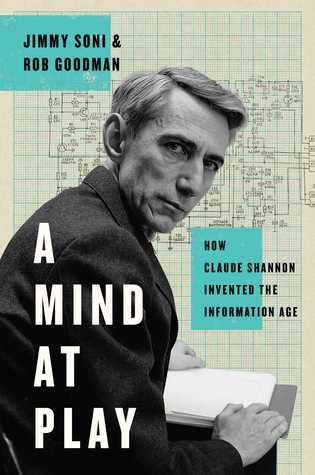 A Mind at Play: How Claude Shannon Invented the Information Age
“Lovely biography of Claude Shannon, who gave us information/communication theory. Covers his life from birth to death, in short chapters, each devoted to some aspect or time period. The longest chapter is a discussion of ‘A Mathematical Basis for Communication,’ and is one of the best summaries…”
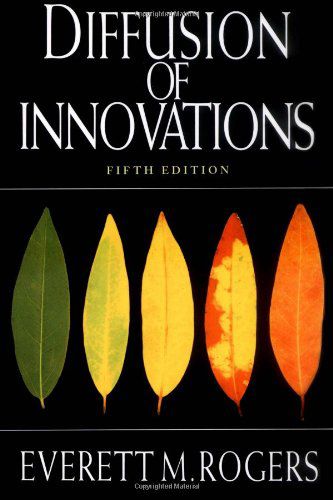 Diffusion of Innovations
“Classic book (in its fifth edition) about how new ideas spread. I like how Rogers has a set of ‘generalizations’ about his ideas. These are things that might not be proven by statistics but feel generally correct. A lot of network theory, but a very good read. Just the right mixture of density and…”
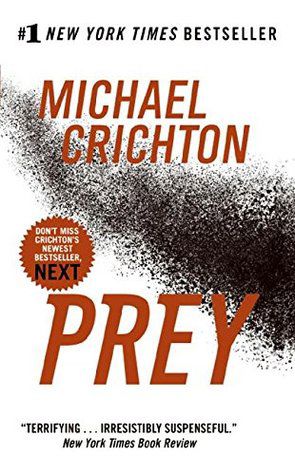 Prey
Prey
“ Another page-turner. More horror than science, unlike Airframe . Truly scary in places, with a nihilistic bent. Got me wondering if this is something that could actually happen. ”
 Whiplash: How to Survive Our Faster Future
“Interesting look at nine factors that are powering the pace of change in the world. I liked the dialectical format – each principle is set against the status quo in an ‘X vs. Y’ format. I feel like the entire book boiled down to, ‘bottom up is winning against top down.’ Well-written, with lots of…”
 Domain-Driven Design Reference: Definitions and Pattern Summaries
“ A short supplement to the main text. A handy refresher, that extracts the major concepts. The book itself is a neat idea – perhaps worth reading again, one a year, to help identify things in the main text you need to brush up on. ”
 The Pentagon’s Brain: An Uncensored History of DARPA, America’s Top-Secret Military Research Agency
 Building and Managing the Meta Data Repository: A Full Lifecycle Guide
“Given the title, I’m a little embarrassed to say I thought this book was about content management. It’s not – it’s about the use of metadata in data warehousing. I stuck with it though because it discussed an aspect of data warehousing with which I wasn’t familiar. It’s dated, but well-written and…”
 The Myths of Innovation
“ Wonderful book on all the lies we’ve been told about how innovation happens. Well-written. Funny and witty, with scads of footnotes and historical references. ”
 Off-The-Shelf IT Solutions: A practitioner’s guide to selection and procurement
 The Knowledge: How to Rebuild Our World from Scratch
“Scary to comprehend how screwed we are if we have to rebuild. Lots and lots of science – perhaps too much, but that’s really the point. Redeems itself in the last chapter, when it explains that the greatest invention is science and measurement itself. We can’t investigate what we can’t measure, and…”
 Cloud Computing
“ Solid book. Straddles the line between the technical and business aspects. ”
 Snow Crash
 Author Experience
 Inventology: How We Dream Up Things That Change the World
 Integrative Document and Content Management: Strategies for Exploiting Enterprise Knowledge
 Countdown to Zero Day: Stuxnet and the Launch of the World’s First Digital Weapon
 Managing Content in the Cloud: Enterprise Content Management 2.0
 Domain-Driven Design: Tackling Complexity in the Heart of Software
 Building Microservices: Designing Fine-Grained Systems
 Reclaiming Conversation: The Power of Talk in a Digital Age
 The Myth of the Paperless Office
 Digital and Marketing Asset Management
 Networks of New York: An Illustrated Field Guide to Urban Internet Infrastructure
“This is an extremely short book (like, 100 small pages with lots and lots of pictures). Start to finish, it might take you 30 minutes. It’s more of a handbook of the different physical markers you can find of the internet in NYC. It has a directory of manhole covers, for instance, and descriptions…”
 The 21st-Century Intranet
“This book was recommended by a friend as ‘the greatest book ever on intranet governance.’ I was a little skeptical, seeing as it was 18 years old, but I did internet history so I took a chance on it. Great book. There is barely anything technical in it – the book is basically 400-some-odd pages…”
 Managing Chaos: Digital Governance by Design
“this is a solid book about larger scale digital governance. i say ‘larger scale’ because it’s primarily about how to get order at the higher-levels – c-level, vp level, and steering committee level. this differentiates ‘governance’ and ‘operations’ for me: governance is Big Picture steering, where…”
 The Dark Net: Inside the Digital Underworld
“So, this book didn’t teach me anything new, but it was interesting, and had some good information about early Internet history, which I appreciate. The book has a chapter on each of a variety of ‘dark’ things that the Net plays host to: Trolling Racism and Hate Groups Bitcoin and Crypto-Currency…”
 Digital Asset Management: Content Architectures, Project Management, and Creating Order Out of Media Chaos
 Mindless: Why Smarter Machines are Making Dumber Humans
“This book is scattered. The author doesn’t build on a single case, but shotguns all sorts of things at the reader. Additionally, it gets very confused with the author’s desire to discuss workers rights and working conditions. There’s a weird segue in the middle to discuss the Cold War, which – for…”
 Rise of the Robots: Technology and the Threat of a Jobless Future
“This was on many ‘best of’ books for 2015, It’s a broad overview of the problems of automation and the potential effects on the economy and society. Beyond the standard litany of automation horror stories, Ford offers some interesting analysis, primarily in seven reasons why the answer to the…”
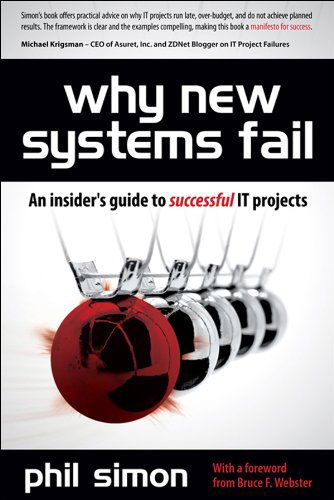 Why New Systems Fail: Theory and Practice Collide
“This is a good look at why a lot of IT projects and implementations don’t deliver. The author is a consultant specializing in ERP, and he details a litany of disastrous project implementations and what went wrong. The book is more of a guide to implementations. It almost details failure causes…”
 Data Science from Scratch: First Principles with Python
“I’m still struggling to find the book I want around data science. I’ve learned that there are two levels: KNOWING data science DOING data science This book is about the second one. Make no mistake, this is a ‘statistical computation’ manual. This shows you how to find statistical answers using…”
 From Memex to Hypertext
“This is really a collection of writings, published elsewhere, about Vannevar Bush’s seminal 1945 essay ‘How We May Think,’ and the idea of the Memex which he proposed. I suspect everyone who reads this book will enjoy it, because you have to be pretty interested in Bush to even want to read this….”
 Getting Started With Ghost
“I’m rating this five stars because it accomplished everything it set out to do, but books like this really defy rating. This is a procedural book. You’re meant to have this open while you do stuff. There’s not a lot of words – it’s largely screencaps and code listings. Books like this also become…”
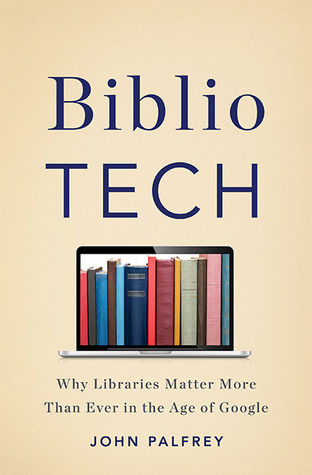 BiblioTech: Why Libraries Matter More Than Ever in the Age of Google
“This book is a vague manifesto for change. The author is a lawyer that was appointed to some commission to study libraries, and this book feels like the result of his research. He’s essentially pushing for libraries to de-emphasize physical collections, and emphasize the role of librarians and…”
 Obfuscation: A User’s Guide for Privacy and Protest
“This book can only really be described as a manifesto. I don’t know what I was expecting really. It starts by identifying and offering a broad survey of obfuscation methods. And while clearly focused on technology, it discussed other, offline obfuscation: chaff deployed from fighter planes,…”
 Enterprise Search
“A good overview of how a large scale enterprise search implementation might go. This is not a technical book, and only gets far into the technical weeds as is absolutely necessary to talk about how search works in general. Considerable time is spent on the larger industry trends and how they might…”
 Humans Are Underrated: Proving Your Value in the Age of Brilliant Technology
“a solid book which explains the value that humans will always have over machines: empathy, and the desire and ability to connect with other people. This is the thing that the machines will never take from us. The book is well-researched and well-cited. Many chapters are anecdotally interesting in…”
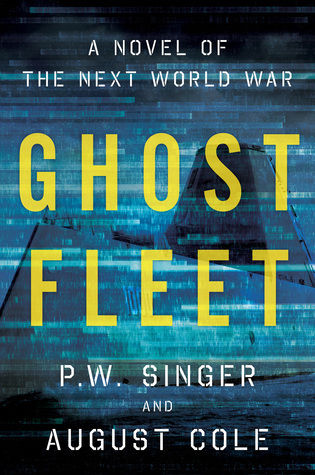 Ghost Fleet: A Novel of the Next World War
“A fairly nondescript techno-thriller about World War 3. In my attempt to replicate my love of Red Storm Rising , I took a chance on it. It was okay. The plot centers around the Zumwalt, one of a series of new stealth destroyers (a real thing, apparently), and its massive railgun (not a real thing,…”
 jQuery Cookbook: Solutions & Examples for jQuery Developers
“I started reading this all the way through, but – like most ‘Cookbook’ titles – it gets increasingly esoteric later on. Still, a very good book which helps you get a grasp on jQuery through considerable examples. Many examples are incredibly basic, which means the books functions well as an…”
 What the Dormouse Said: How the Sixties Counterculture Shaped the Personal Computer Industry
“The title promised a discussion about how the 60s ‘shaped’ the personal computer industry, but I just didn’t see it. The book is a history of technology and how the seminal figures of that period interacted with culture, but it didn’t show me how society ‘shaped’ the industry, as much as the…”
 The Idea Factory: Bell Labs and the Great Age of American Innovation
“ A solid history of Bell Labs. Interesting, but a bit tedious. It’s astonishing how much stuff was invented there – it puts Xerox PARC to shame, really. The transistor? Wow. Meticulously researched, but tends to bog down under its own weight in places. ”
 How We Got to Now: Six Innovations That Made the Modern World
“I love Steven Johnson. ‘Where Good Ideas Come From’ is one of my favorite books. This book looked back at 5-6 ‘inventions’ that remarkably changed the modern world. I quote ‘inventions’ because these things are really, really basic. So, things like ‘cold’ (meaning, the ability to make things…”
 100 Ideas that Changed the Web
“A nice book for browsing – 100 chapters of inventions that ‘changed the web.’ Some are unexpected and fascinating – the Mundamen, The Blair Witch Project, Xanadu, Drudge – and others are obvious: markup languages, Apache, micro-blogging, etc. Each chapter is a 1-2 minute read. I read them five at a…”
 Stop Stealing Sheep & Find Out How Type Works
“I can’t recommend this book. It’s a little ironic that the biggest problem with a book on type is its format. The book is divided into chapters, but each one is essentially a collection of mini-essays. In each two-page spread, the left page is an image of some kind, meant to illustrate what the…”
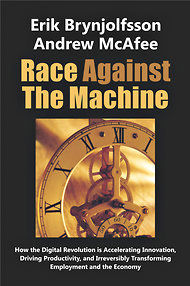 Race Against The Machine
“A good overview of how technology is changing the employment landscape. Technology is eliminating jobs, and the authors present the case, along with 19 things we need to do as a society to increase innovation to make up the difference. We need to keep innovating to create new jobs to replace the…”
 The Innovators: How a Group of Hackers, Geniuses and Geeks Created the Digital Revolution
“Amazingly wonderful book on the history of the digital age, all the way from Ada Lovelace and Charles Babbage through to Sergey Brin and Larry Page. Wonderfully written, always engrossing. It begins with a long discussion of Lovelace, Babbage, and Turing’s thoughts on whether a machine could ever…”
 Taming Text: How to Find, Organize, and Manipulate It
“The book alternates between a great overview of the subject, and getting down-and-dirty with the code. I don’t know a good solution to this, but I was less concerned with the code and more concerned with the overhead view. It’s a good discussion of how to manage text: how to tokenize it, search it,…”
 Automate This: How Algorithms Came to Rule Our World
“A somewhat interest book that confirmed what I already knew – algorithms are taking over the world. The author recaps all sorts of industries where tasks are getting computerized, from medicine to the law to (of course) wall street. He’s very Gladwell-esque – full of anecdotes and illustrations….”
 Programmer’s Guide to Drupal
“ If you’re a developer and you just never ‘got’ Drupal, this is your book. If this book succeeds at one thing, it’s to change your mindset about Drupal – to understand the different paradigms you need to adopt to work with it. Highly recommended in that sense. ”
 Drupal for Designers
 Tubes: A Journey to the Center of the Internet
“Really enjoyed this book. The author decided he wanted to ‘visit the Internet.’ The…physical Internet. Each chapter is a look at some physical manifestation of what makes the Internet go, from Internet exchange points to undersea cables to data centers. Along the way you work with road crews…”
 Where Wizards Stay Up Late: The Origins of the Internet
“This book is good if you want a long, detailed history of the ARPANET, the direct predecessor to the Internet. For that, it’s fascinating. That said, it’s not a casual reader. I’m neck-deep in the Internet every day and am a fan of Internet history, and even I got bored in places. Still, if you…”
 Big Data: A Revolution That Will Transform How We Live, Work, and Think
“wonderful book. presents a wire-ranging looking at the big data phenomenon, specifically on the technological and societal changes that have occurred to bring it about, and what this means to the future. things like: Our sample sizes are increasing. For many applications, we’re able to poll n =…”
 Here Comes Everybody: The Power of Organizing Without Organizations
 Wikinomics: How Mass Collaboration Changes Everything
“I actually quit this book part way through, which I’m loathe to do, but the simple fact is that I was reading it seven years too late. It was written in 2006. Things that were revolutionary then just aren’t anymore. This is made even more apparent by a breathless, hyperbolic writing style that made…”