“I absolutely loved this book. It explains the world of contemporary art – who buys it, how it sells, and why it becomes valuable. Lots of books seek to explain things like this, but they think they can do it through anecdotes and vignettes. The books spend each chapter focused on a person. They…”
“This book started as an email newsletter that I subscribed to. I then backed a Kickstarter-ish project to get it published. It’s exactly what it claims to be: a comprehensive history of text adventure games – the games where you make specific decisions, usually in a branching narrative, often by…”
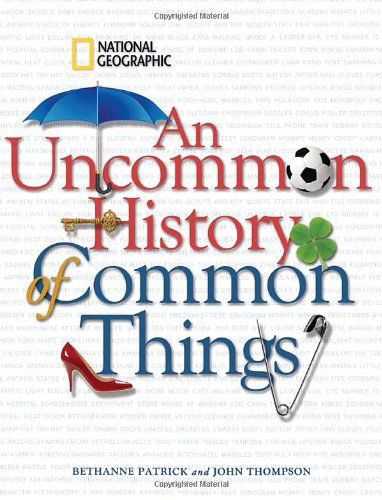
“A lovely collection of blog posts about all the hidden stuff in your city. Why lampposts are shaped the way they are. Why manhole covers are round. What the markings on sidewalks mean. It’s a great reader – every ‘chapter’ is really just a blog post or podcast episode, so you can read 4-5 of them…”
“A nice book for browsing – 100 chapters of inventions that ‘changed the web.’ Some are unexpected and fascinating – the Mundamen, The Blair Witch Project, Xanadu, Drudge – and others are obvious: markup languages, Apache, micro-blogging, etc. Each chapter is a 1-2 minute read. I read them five at a…”
“I didn’t love this book. Note that the author is claiming the 100 ‘most influential’ books, not the best (which is subjective anyway). I got annoyed with the arrogance of the author. He writes with a palpable disdain for anything he doesn’t like, particularly religion. (I mean, we get it – you’re…”
“An interesting look at the world in 1913, before the Great War. The book doesn’t mention the looming war, and that’s kind of the point. It goes city-by-city, discussing what was happening in each, on the eve of World War 1. The result is…interesting. The book paints the picture of the world as a…”
“I am a vaccine skeptic skeptic , meaning I absolutely believe in vaccines and have little time for people who imagine negative health outcomes from them. I think there’s ample evidence that vaccines are the single greatest health advancement that Mankind has ever known, and most beliefs that…”
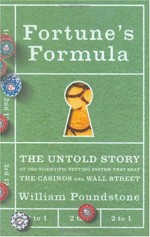
“This is an entertaining book that falls prey to what I call ‘The Malcolm Gladwell Syndrome,’ which says ‘just find a bunch of anecdotes and connect them together with the barest whisper of an over-arching premise.’ To be fair, this makes for some interesting books. But those books stray pretty far…”
“The informal period from the 1400s to the 1700s when Europeans sailed the ocean to new lands. Here’s a list of some of the places Europeans visited (‘discovered’) during this period. The western coast of Africa and the Cape of Good Hope (Portugal) A sea route to India (Portugal) Central and North…”
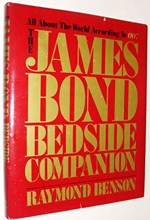
“This book was written by an airline journalist, and it shows. It’s very low-level – a sometimes bewildering recitation of deals and maneuverings by the two biggest aircraft manufacturers in the world: Boeing and Airbus. It’s like if every news article ever written about them were bundled up into a…”
“This was a group of creatives that would meet for lunch at the Algonquin Hotel in New York City during the interwar period of the 1920s. Many of them were newspaper writers and columnists, and the subjects of their conversations were often printed in the papers of the day. Later, several actors and…”
“It’s tough to review this book. It was written 150 years ago, and I am clearly not the intended audience. It’s a children’s story, which came from a story that the author made up to tell to three young girls one afternoon. To be clear: there’s no real narrative here. The story is basically a fever…”
“Shockingly good novel that will make for an Oscar-winning movie one day. It follows three separate narrative threads during World War II – a young radio operator in Hitler’s army, a blind girl forced out of Paris by the Germans, and a Nazi officer with terminal cancer – as they slowly, inevitably…”
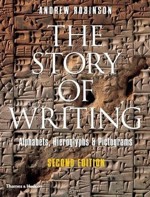
“Ridiculous book supposedly about the spread of the alphabet, but really about anything but that. This author hasn’t found a tangent he didn’t want to go off on. At any given point, I couldn’t figure out if the author was talking about the purported subject, or just telling some random story about a…”
“Here’s the basic premise – Images and writing are very different. They utilize different parts of the brain. Images are feminine, writing is masculine. Images are perceived all at once, holistically – we step back and take in a visual scene, in aggregate. Writing, on the other hand, is sequential –…”
“Anarchism rejects any type of hierarchical government or authority. It believes in ‘free association,’ which means humans coming together voluntarily to solve problems, rather than being forced by the state. I’ve always wondered how someone committed to anarchy would create a society, since…”
“This is probably the most comprehensive, raw perspective of the early years of the AIDS crisis. A couple contextual notes – First, this book was written back in 1987, when the AIDS epidemic was still raging. Second, the author was gay (he died of AIDS in 1994). Those two facts are important,…”
“This technically refers to the English people of the Middle Ages. Saxony is a German state. The ‘Saxons’ of the Middle Ages were seafaring people, like the Vikings of Scandinavia. Some of them migrated to England, where they combined with the ‘Anglos’ of that region (who had also migrated from…”
“ This literally means ‘before war’ in Latin. It’s most often used to discuss the period of Southern life prior to the American Civil War. Less known is the antonym ‘postbellum,’ which means the period after a war. ”
“ This technically means ‘before the Great Flood.’ ‘Diluvial’ means ‘related to a flood.’ But, over the years, it’s become a synonym for ‘old’ or ‘ancient,’ when used to refer to non-historical things. ‘Diluvian’ means ‘related to or brought about by a flood’ and ‘ante’ is the prefix for ‘before.’ ”
“This is a general term meaning ‘the era of Mankind,’ or the period of Earth’s history where humans have existed and have had an impact on the planet. It’s often used in an environmental context to encapsulate the changes humans have had on the planet. The term is not totally accepted as a formal…”
“This was a very important road in Ancient Rome. It was named after a guy called ‘Appius.’ It was a technologically advanced road for the time (300s BC). It was paved with interlocking stones, and was crowned to run water off to gutters on the sides. It was about 350 miles long, and in one section,…”
“ Arabic Numbers are the common, base-10 numeric system most people in the world use: 0, 1, 2, 3, 4, 5, 6, 7, 8, 9. They’re not from Arabia specifically, but they were brought to Spain in the 900s by Arabic speakers from North Africa across the Straight of Gibraltar. ”
“About 50 pages into this, I was bored, and it seemed very similar to another book I had read. Sure enough, turns out Annie Jacobson wrote The Pentagon’s Brain: An Uncensored History of DARPA, America’s Top-Secret Military Research Agency . I’m just not a fan of her writing, I guess. The truth is…”
“So, here’s the problem with this book: the situation is ultimately just not that exciting. Yes, the movie was apparently great, and the set-up is amazing – diplomats hiding in a hostile country, escaping through disguise, etc. – but in the end, the CIA forged some documents and they all walked out….”
“An interesting book, but also not what the title would suggest – the subtitle anyway. This was not an all-encompassing history of money and finance. The book starts with Jewish moneylenders in Venice, and then goes on to discuss the bond market, the stock market, real estate, etc. It’s basically a…”
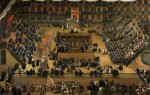
“It’s Portuguese for ‘act of faith.’ In most cases, it refers to a series of events during the Inquisitions of the 1500s through the 1800s. These were public punishments and executions of those believed to be heathens or witches. Prisoners were whipped, hanged, or burned at the stake in front of…”
“It is just south of present-day Baghdad, Iraq, about 50 miles, along the banks of the Euphrates. It no longer exists as a major population center, but there are significant ruins of the ancient walled city remaining. Here it is on Google Maps. Babylon was no longer a ‘city’ by about the 900s – was…”
“ This comes from Bacchus, the Roman god of wine and revelry. In some context, it has a sexual subtext, used to describe and orgy or indulgent sexual performance. Humorously, one of the top search results for the word is the Bacchanal Buffet at Caesar’s Palace in Las Vegas . ”
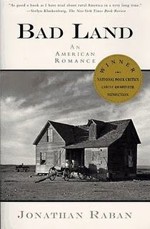
“This is a book about a place. Not the Badlands of South Dakota (which I initially thought), but the ‘bad land’ of Eastern Montana. It’s the story of immigrants who settled there and claimed homesteads on the promise of dry farming techniques and decent weather. But the weather was bad, and dry…”
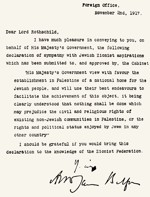
“This was a 1917 letter from the British Foreign Secretary (their Secretary of State, basically) to a leader of the British Jewish community which expressed support for a Jewish homeland in the area of (then) Palestine. It was the first open acceptance and validation of Zionism . The letter was both…”
“This refers to the fragmentation of something into smaller units that are hostile to each other. So, if a country were to break down into smaller regions, all of which went to war with each other, this would be an example of balkanization. I was familiar with the term from context, and from the…”
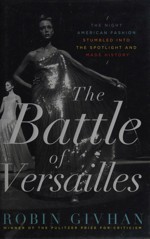
“In microcosm, this is the story of a single event – a fashion show outside Paris in 1973 that was over in about three hours. But if you take a longer view, it’s a story of the history of fashion to that point, and its intersection with race in America. The Palace of Versailles is where the last…”
“There are multiple contexts here, but it’s most often used to refer to a specific German art and design school which operated in the 20s and 30s, and the aesthetic which emerged from it. It was a specific organization, but has become a general movement and approach to design. The Bauhaus school and…”
“Bebe Rebozo was a close friend, confidante, and adviser of Richard Nixon. ‘Bebe’ was a nickname – it’s Spanish for ‘baby’ as he was the youngest of 12 in a Cuban family. Rebozo was often suspected of criminal activity, but nothing was ever proven, other than a minor tax penalty. Rebozo was also…”
“I’ve always been interested in how we relate to fictional spaces, mentally. There’s a whole sub-genre of art that creates floorplans for fictional spaces, and I’ve always been amazed at how interesting I find it. We identify so much with these spaces, and it’s fascinating for me to see them laid…”
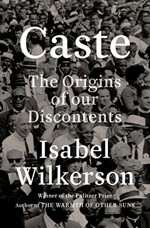
“This might be the Whitest thing I could ever say, but I just didn’t get it. I understand the point of this book – it’s a cry of protest, meant to be a reminder of how far we have to go as a society in terms of racial equity, lest we get too impressed with ourselves. Stylistically, the book can be a…”
“In the Old Testament, several people are stated to have lived almost 1,000 years. Is this literal, figurative, or a mistake? One theory says that a simple translation error caused months to be counted as years. If someone was said to have died at 950 years, it was really 950 months , which is 79…”
“This is a book about pooping. Not personally, but as a species. How we deal with our poop, around the world. It’s what I call a ‘vignette book.’ Over 10 or so chapters, the author tells disconnected stories that each explain some aspect of the story of poop. Examples: The World Toilet Conference…”
“In the context I decided to investigate, it refers to the starting defense of the University of Nebraska Cornhuskers. To differentiate players during practices in the 1960s, the Nebraska coach put his defenders in black jerseys, and the name stuck. When Nebraska keeps opponents to a low score, it…”
“Lots of people have been killed on Sundays, and the phrase is used to describe lots of mass killings. Wikipedia shows 20+ events that are connected to the phrase. The most recent event and the one most clearly associated with the phrase from this generation is a 1972 shooting of protesters in…”
“‘Bohemia’ was an actual place – it was the western end of the current Czech Republic, though it’s not technically named this anymore. The word ‘Bohemian’ has come to refer to a carefree, counter-cultural, often traveling lifestyle. This usage comes from a French reference to the Romani people of…”
“A ‘vanity’ is some physical object that’s considered sinful or promoting of sinfulness (e.g. alcohol, pornography). So a ‘bonfire of the vanities’ is a burning of these objects as a symbolic act to promote holiness and rid the world of temptation. The original ‘bonfire of the vanities’ was an…”
“Meticulously-researched biography of Dietrich Bonhoeffer, the German theologian who became an outspoken resistor of the Nazis, and an eventual plotter in Hitler’s assassination, for which he was executed just before the Allies would have reached him. The book really doubles as a history of the rise…”
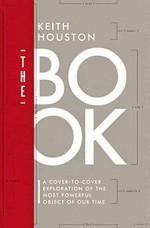
“ i didn’t write a formal review of this, but i talk about the book quite a bit in this blog post: The Book Itself: Four Thoughts on the Enduring Value of the Printed Book ”
“This book was not what I expected. I thought I was getting a book on information organization and architecture…but that’s not what this is. This is an art book. It’s a collection of the ways people have tried to express hierarchical information in tree forms for thousands of years. It’s a picture…”
“This is a book that got written accidentally – in preparing to write ‘The Big Short,’ Michael Lewis realized he had enough material on country-specific bubbles to write another book. This is that book. Each chapter is a look at a particular country – Iceland, Ireland, Germany, California (almost a…”
“Okay, let’s get this out of the way: I didn’t understand 90% of this book. And I don’t think most other people will either. My question is this: can you not understand a book, but still get something out of it? Yes, I think so. To be clear, just because I didn’t understand the entire book, doesn’t…”
“This is a lovely history of New York City, focused down to a single street. It follows Broadway north from the southern tip of Manhattan, mile by mile, and talks about the history of the city as the street moved northward. Along the way, it has random vignettes of things that happened on the…”
“The Cambrian Period was an evolutionary timeframe occurring about 541 million years ago, and lasting for about 55 million years. It was named for the Latin name for Wales (‘Cambria’), which is where considerable fossil evidence was discovered. The Cambrian Explosion was an event during that period….”
“Nice, short novel by Steinbeck. He creates a great sense of place, and a great cast of characters, through little side anecdotes that have nothing to do with the main action of the plot. It’s a good look at community during the Great Depression. I think I enjoyed it in part because it was so short….”
“William Bligh was the (purportedly) ruthless and cruel captain of the HMS Bounty , the crew of which famously mutinied in 1789. Bligh and his loyalists were set adrift in a small boat, and the Bounty continued on to the Pitcairn Islands , where the mutineers settled with some Polynesian women they…”
“This is a small coffee table book, really. It’s mostly pictures, with a slight narrative running through it. It’s published by the Library of Congress directly, and has a foreword from Carla Hayden, the current director. There are a few chapters which talk about the history of trying to organize…”
“In general, this refers to something that can be linked back to Rene Descartes, the French scientist, famous for uttering the phrase, ‘I think, therefore I am.’ There are several scientific, mathematical, and philosophical branches that are named for Descartes: Cartesian geometry Cartesian…”
“Stroebel was a Chicago crime reporter, and he approaches his investigation to the divinity of Jesus with an analytical bent. Each chapter is an examination of one aspect of doubt, and to resolve it, he interviews one noted scholar in that field. Here are the questions, which are a good…”
“ Enjoyable bio of Paul Otlet. Covers the intersection between his desire to index information, and his belief that this would promote world peace. He was a very political librarian, it turns out. ”
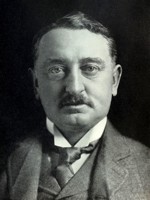
“A British businessman and politician who operated mainly in Southern Africa in the late 1800s, where he moved as a child. Rhodes is known for several things: One of the governors of the main British imperial presences in Southern Africa – the Cape Colony (now South Africa) Creator of the De Beers…”
“Neither. Both the actor and the city were named (indirectly) for a medieval English hunting ground. The actor, who was born in 1943, is actually named Cornelius Chase. ‘Chevy’ is a childhood nickname. (Apparently, he was also indirectly named after the English land, not the city.) The city in…”
“This is the story of a book – a fictional novel by a classic Greek author – and how it moves through the lives of five people over thousands of years. The book tracks through three time periods. 1400s in Europe. A boy is conscripted into The Ottoman Army to sack Constantinople, and a girl in that…”
“ Fantastic, detailed history of the Cold War. covers all the bases, from World War I on, including quite a bit of coverage of India and Africa, outside of the big players – the U.S., Soviet Union, and China. Really, well done. 800 pages, but never got bogged down in it. ”
“This is the third Gabriel Allon novel I’ve read (there are presently 23 of them). It was probably the weakest of the three. There’s always an organizational villain. In the other novels , he demonized Israel and the Swiss banking industry. This time it’s the Catholic church – or a faction within…”
“I’m giving this five stars just because it’s so comprehensive, and I applaud the detail of the work. But…it’s a lot. Perhaps read this blog post from Kirk Center: Ten Conservative Principles This is the crux of Kirk’s argument. This book is simply a long historical survey of the basis and…”
“I really shudder at the thought of what it took to write this book. There’s just so much here. It’s a comprehensive history of science in the 20th century, and even earlier. The basic idea is that the science seek to converge. There’s a movement in the scientific community to get scientific…”
“There are ‘epic’ novels, and then there’s this. It’s the history of South Africa, starting in 14,000 BC and ending in 1978. There are 14 chapters, and each chapter handles a different time period. We start about 10,000 years back with cave dwellers wandering the southern part of the continent,…”
“This book was written in 2003, but that doesn’t matter because the events it talks about have happened over a millennia or so. This is a discussion of the ‘problems’ that Islam has with the West: why terrorism and anger toward the West are on the rise all over the world. In the end, the list wasn’t…”
“The Cult of the Dead Cow was an early hacker group, formed in the 1980s. This book tells its story over the years and where everyone ended up. It’s…scattered. There are a lot of people, and the scope is large. The book is essentially trying to follow a fractured group of people over 40-some-odd…”
“This was a political movement in China in the late 1960s. Chairman Mao Zedong had lost power due to the failure of the The Great Leap Forward, and he was concerned that he was losing his grip on the Communist Party. He began the Cultural Revolution by stirring up fears that capitalists had…”
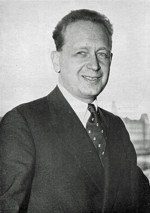
“He was the second Secretary-General of the United Nations, and is considered one of the greatest diplomats in world history. He served from 1953 to his death in 1961. He was killed in a plane crash in Congo. There are conflicting reports of the cause, and it was still being investigated into the…”
“I didn’t get into this. I thought it was an examination of the financial type of debt, but it literally starts way back at the dawn of civilization with the idea of moral debt – ‘I owe you my life,’ and such. Then it progresses laboriously forward through a long period of human debt – slavery and…”
“This is compelling book in a weird format. It’s about two things: (1) the 1893 World’s Columbian Exposition in Chicago, and (2) a serial killer at work in the city during that time. The two stories are weirdly separate. The killer visits the fair, but doesn’t commit any murders there, so the…”
“Classic book (in its fifth edition) about how new ideas spread. I like how Rogers has a set of ‘generalizations’ about his ideas. These are things that might not be proven by statistics but feel generally correct. A lot of network theory, but a very good read. Just the right mixture of density and…”
“Great novel. Does not read like it was written 121 years ago. Genuinely terrifying in parts. Suffers a bit in the middle as the characters run around London, and I got a little confused as to what they were doing. It turns into a bit of a detective story. I got the main gist of what was going on,…”
“A shockingly good book about the history of the greatest disease Man has ever known. The author tracks the history of cancer from when it was first identified in 4,500 BC through to the present day. The approach is holistic – the author examines cancer clinically, scientifically, politically,…”
“Fascinating story of Huguette Clark, the youngest daughter of mining baron W.A. Clark. She was fabulously wealthy, but reclusive and eccentric. She maintained ‘empty mansions’ that she never lived in, and even spent the last 20-ish years of her life contentedly living in a hospital room. (How do…”
“This book is a tough one to read, for a few reasons. First, the dialog and descriptions are…lyrical? Pretentious? Long-winded? I don’t know how to describe it, but the author would never say something in one word if he could use 37 words instead. It’s like he knew he was writing a Very Important…”
“I bought this because it was recommended in a list of ‘steampunk novels,’ and I’ve always been a little interested in that genre. It’s… okay. First of all, an unbeknownst to me, it’s a young adult novel. Additionally, it seems to be targeted to teenage girls. Sophronia is a girl from a wealthy…”
“This is the inside story of The Plame Affair – the revelation that Valerie Plame was a CIA operative, allegedly initiated by the Bush White House because Plame’s husband, Joe Wilson, had been critical of the administration’s reasoning for starting the Iraq War. The most obvious part of this book is…”
“This is a long look into the Bush family dynasty. Turns out that before George H.W. (the 41st President) and George W. (the 43rd President), there is a long history of powerful people in the Bush clan. The book starts back with Samuel Prescott Bush, in the 1800s. He was a powerful and wealthy…”
“This is a ‘historical novel.’ It’s sort of fiction, but sort of not. It’s a narrative of history, but apparently quite accurate. The book mainly follows two men: Gaius Marius (a real person ) and Lucius Cornelius Sulla (also a real person ), during the period of 110 - 100BC in Ancient Rome and its…”
“It is what it claims to be – a detailed history of WWI. Actually, I understand that this is the short version. The author is apparently one of the most renowned WWI scholars in the world, and has a three-volume history in the works, but he decided to make an easier-to-digest version. He approaches…”
“This is a magisterial history of The Great War. Nothing is left out. The book proceeds down a strict timeline, battle by battle, event by event, mutiny by mutiny. It starts just before, and ends just after. The numbers are staggering – all the numbers. The dead, the wounded, the costs, the number…”
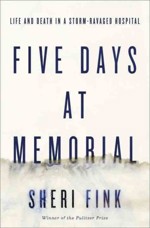
“This is a story of a New Orleans hospital during Hurricane Katrina. It lost power, was surrounded by water with backed-up sewers, and there weren’t enough boats or helicopters to evacuate everyone. Lots of people died. Maybe too many people. When the hospital lost power, all the ventilators shut…”
“Michael Lewis could write about anything and it would be interesting. In this book, he tackles High Frequency Trading, and reveals just how absurd and unethical it is. Essentially, trading houses are using technical and ultra-fast communications to bet against their own customers. The entire thing…”
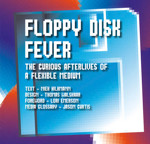
“This is an odd book. It’s…neat, but I don’t understand why on Earth anyone published it. It’s a series of interviews about people who are still doing interesting things with floppy disks. They’re using them to distribute ‘diskmags,’ or using them in artwork, or hoarding them, or doing something…”
“This is really a collection of writings, published elsewhere, about Vannevar Bush’s seminal 1945 essay ‘How We May Think,’ and the idea of the Memex which he proposed. I suspect everyone who reads this book will enjoy it, because you have to be pretty interested in Bush to even want to read this….”
“I have no idea why I bought this book. Honestly, I don’t even remember buying it. The book is a … call (?) to a new future. I think the title refers to events in the past that resemble current events, or how our future should turn out. I know that sounds confusing. However, I can’t categorize the…”
“An absolutely lovely novel, which is – at its core – about the relationships we make, and specifically friendships that develop over extended periods of time. Alexander Rostov is an aristocrat who is convicted of subversion in the years following the Russian Revolution. Since he resides in the…”
“Thrilling story of a cholera outbreak in London in the 1850s, and the physician who tracked down the source. At the time, illness was thought to come from ‘bad air,’ but a physician named John Snow mapped the illnesses and determined that they were clustered around a water pump in Broad Street. No…”
“This a period of American history at the end of the 19th century. Opinions differ on when it started – certainly post-Civil War, but various accounts have it starting in the 1860s or 1870s and running through the end of the century. The period was characterized by enormous post-bellum economic…”
“George Gipp was a football player at Notre Dame in the late 1910s. His nickname was ‘The Gipper.’ He died of an infection during his senior year. In the 1940 film, Knute Rockne, All-American , he was portrayed by Ronald Reagan. In his deathbed scene, Reagan implores his teammates to ‘…win just one…”
“What’s interesting about this book is that there’s just very little information about the actual process of creating the King James Bible. Not much of the historical record of the actual translation process remains. So, what the book does is concentrate on the societal, political, and religious…”
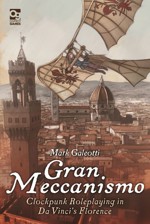
“This is a role-playing game rulebook. I love to read these, I think because I love to put rules around domains of information, and there’s nothing as amorphous as life itself. (Maybe read this: Are Computers Just Really Expensive Dice? ) The setting is Florence, Italy of the Italian Renaissance –…”
“Enormously entertaining book about the Beanie Baby craze of the mid and late 90s. The book goes deep into Ty Warner’s backstory. He’s the founder of the company that bears his first name. He’s a man who spent his entire career in ‘plush,’ which is the industry term for stuffed animals. Warner is an…”
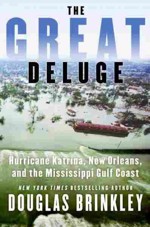
“This is the almost-definitive history of Hurricane Katrina. I say ‘almost,’ because it was written about a year after the 2005 hurricane, which means there’s probably some history since then that’s been missed. This is 700 pages of misery, basically. New Orleans didn’t stand a chance under the best…”
“Fantastically written history of how poorly flight attendants were treated in the 60s and 70s, and how they fought back. Back then, a stewardess was a key selling point for airlines. Most travelers were male, and stewardesses were employed to indulge the male ego with an image of servitude. They…”
“I bailed out on this book about a third of the way in because it doesn’t really have a point. The only point is that the author is pissed off and wants to rant about stuff. The author is kind of an Internet personality. He was an editor for Rolling Stone , he has a podcast and a Substack, and last…”
“This was a wildly entertaining book, because of both the subject matter and the writing style of the author. The book is about military science, but not weapons. It’s about a bunch of the other, decidedly unglamorous things we do to enable humans to fight wars, and how science is trying to make…”
“No, this wasn’t a specific place. It was technically the name of the Soviet agency that managed the forced labor camps of the Lenin and Stalin eras. In the Western world, the term ‘gulag’ came to refer to the generic Soviet system of camps, regardless of where they were. There were hundreds of…”
“I love the subject but just couldn’t connect with the writing style. I found it confusing. Not an entirely bad book – it presents Gutenberg as a businessman (and not a very good one), and covers all the religious and political conflict in Mainz, Germany that helped the printing revolution along….”
“This is the discipline of studying history. It doesn’t refer to the actual study of history, but rather to the practice, process, and tools that we use to study history. Wikipedia makes an interesting point: The historiography of a specific topic covers how historians have studied that topic by…”
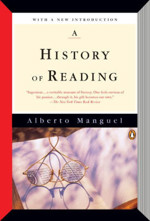
“Kind of an odd book, honestly. It’s really a meditation on reading in all its forms. Each chapter covers a different aspect of reading: Being Read To, The Author As Reader, etc. What it didn’t seem to be was an actual ‘history of reading,’ as the title suggested. That doesn’t mean it’s bad, it’s…”
“A fun book about six beverages that have figured heavily in world history: Beer Wine Spirits (hard liquor, basically) Coffee Tea Soft drinks Each of these have influenced the world enormously in different ways. The world grew up around these drinks – People wanted access to them Congregating over…”
“I didn’t quite know what to make of this book. I couldn’t really figure out the point. It seems to be equal parts a reflection on Nadella’s first 2-3 years as Microsoft CEO, and a look to the future of computing. Each chapter has a theme, but they almost just feel like a collection of reflections…”
“The author claims that we’ve steadily expanded the idea of ‘war’ so that we’re technically always at war, and the military is being asked to do so many things, many of which have nothing to do with actually fighting a war. She writes well, but the book got long, and the point got really abstract…”
“Much better than I expected. As a Democrat, I read this as a counterpoint to my inherent views and found that I liked it quite a bit. Colson is a very good writer, and the book is engaging. While I didn’t agree with everything he said, he makes some very good arguments in places, and the book…”
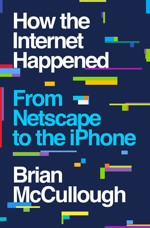
“This is a fun book, but I take exception with the first half of the title – this is not ‘how the internet happened,’ which explains the qualifier ‘from Netscape to the iPhone.’ This is really about 13 years in the history of the web, mainly. ‘The Internet’ dates to the 50s or the 60s, but this is a…”
“Fantastic book about the history of American colonialism, from the Philippines (which we set free) to Puerto Rico (which today exists in some weird in-between state), to dozens of islands (which we keep for geopolitical reasons). There are untold stories here about how the US never quite figured…”
“An interesting guide to how to interpret fiction. You know those classes in college where the professor talked and talked about a book and got so many weird interpretations of it that you were wondering if you had read the same book? Well, this book tries to give you some insight on that process….”
“I love Steven Johnson. ‘Where Good Ideas Come From’ is one of my favorite books. This book looked back at 5-6 ‘inventions’ that remarkably changed the modern world. I quote ‘inventions’ because these things are really, really basic. So, things like ‘cold’ (meaning, the ability to make things…”
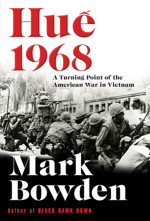
“ The astonishing story of one of the bloodiest battles of the Vietnam War. Absolutely harrowing writing, and good background on the Vietnam War itself – how and why we got to where we were. ”
“Read this on the recommendation of a friend … who happens to be a former seminary professor. 99% of this went way, way over my head. It’s dense. The book is actually three essays transcribed from lectures Barth gave in the 50s. Man, it’s a lot. Not rating this because I was not even close to the…”
“This is a very long history of IBM, which is exactly what it promised to be. I’m not sure what I was expecting. IBM was around for most of the 20th century. It got started with scales and calculating machines – back in the early part of the 20th century, calculating stuff was complicated, hard…”
“ A solid history of Bell Labs. Interesting, but a bit tedious. It’s astonishing how much stuff was invented there – it puts Xerox PARC to shame, really. The transistor? Wow. Meticulously researched, but tends to bog down under its own weight in places. ”
“incredibly well-researched look back at an obscure attempt to catalog scientific papers. Herbert Field was a man driven by a dream, but frustrated at every turn. This isn’t a success story, but it’s worth reading if you love library science or underdog stories. The ‘intrigue’ of the title is a…”
“This is a history book that answers the question: what did librarians do to help the war effort during World War II? Well, a lot it turns out. They amassed foreign periodicals and scoured them for intelligence information They captured and cataloged information left behind in German facilities…”
“Amazingly wonderful book on the history of the digital age, all the way from Ada Lovelace and Charles Babbage through to Sergey Brin and Larry Page. Wonderfully written, always engrossing. It begins with a long discussion of Lovelace, Babbage, and Turing’s thoughts on whether a machine could ever…”
“This one was tough. It is exactly as advertised – a detailed historical account of the origins of newspapers, specifically in 14th - 18th century Europe. The problem is, that’s kinda boring. I can’t fault the author, but it’s very, very dry topic. And the book is very detailed. I’m glad I read it,…”
“John Maynard Keynes was a British economist. He had a lot of theories about economics, but it basically boils down to this – The government has to intervene in the economy . In a rescission, government has to increase spending to increase demand. During a boom, the government needs to reduce…”
“This is the story of the messy end of Sumner Redstone’s life and the struggle for control of his companies: National Amusements, and, by acquisition, Viacom and Paramount. And it really is the story of the end of Redstone’s life. Not even halfway through the book, he turns 60. At about the halfway…”
“I eventually abandoned this book, but I read quite a bit of it. What I came to appreciate is that history of the Middle East and history of the British Empire are wildly intertwined. The British were all over that region, and when they left, they made some attempts to split it up, but then left…”
“Here’s my problem with this book – it wasn’t a history, it was more of a personal memoir . I was expecting the detailed story of the Kurdish people, but instead I got a story about the author and how he interacted with the Kurds over the course of several decades. The author had some history with…”
“Not my jam, really, but my son and his girlfriend were reading it, so I decided to give it a shot. There are a lot of characters, and time travel is involved, so the book is all over the place. At any given moment, I had the barest understanding of what was happening. Characterization was poor, and…”
“Strange little book. I wanted to read some Michener without commitment, and this is the shortest Michener book. It’s a family history, told in flashback by a modern-day solider preparing to testify in front of Congress during the Iran-Contra scandal of the 80s. The main character comes from a long…”
“I struggled with this book. The author admits that it’s about almost everything except a direct comparison of the legion and the phalanx. After a short introduction to ancient military tactics, it pretty quickly launches into a long history of ancient warfare and battles. About halfway through…”
“This is an authorized history of the LEGO company . Emphasis there because this is less about LEGO the toy . It’s largely a history of the business of LEGO. And it’s very authorized. Throughout the book are sidebars from Kjeld Kristiansen, who until recently was the head of the company. He is the…”
“This is the second of Mark Levin’s books that I’ve read, after Liberty and Tyranny . Levin, of course, is the firebrand right-wing radio show host. He’s considered one of the most aggressive , according to Wikipedia. Like his other book, Levin uses the word ‘Statist’ to describe someone who he…”
“This is a very (very!) big coffee table book of library photography. I’m not sure there’s much more to say than that. It’s enormous. It probably weighs 10 pounds. The photography is amazing. The pages are so big, it’s absorbing. However, it’s worth pointing out that a lot of libraries are very,…”
“This is exactly what it promised – a long, detailed history of libraries, from scrolls in chests to books on the shelves. Libraries really started with the church. They were first repositories of books, and they grew from there. Back in the day, books were expensive because mass printing was in its…”
“I thought this was a novel. It’s not. But it’s wonderful. It’s the story of: The 1986 fire at the Los Angeles library and its subsequent investigation and aftermath The larger Los Angeles library system and its history The future of libraries in general The three topics interweave throughout the…”
“This is a view of history that attempts to paint the Confederacy and its role in the American Civil War in the best possible light. It emerged sometime after the war, when southerners were trying to recover from the damage of the war and rationalize why it was fought. The ‘lost cause’ means that…”
“This is the story of several things, simultaneously. Most prominently, it’s the story of Percy Fawcett, an explorer from England who ventured into the Amazon twenty-some-odd times. He was utterly convinced there was a lost civilization somewhere therein, which he called ‘Z’ It’s also the story of…”
“I’ve become a little obsessed with the Isabella Stewart Gardner museum heist lately, after listening to the ‘Last Seen ‘podcast. This book is by the definitive reporter to cover the crime – he’s been reporting on it, on and off, for 25 years. Sadly, the book is scattered. It’s not a…”
“This purports to be a history of a single family, but it’s really a history of the entire Italian renaissance. The Medici just happened to dominate that time period. It’s interesting to see how the Medici crossed paths with so many other legendary people of that period. Da Vinci and Michelangelo…”
“For the record, I didn’t read the raw play, but rather the book ‘The Merchant of Venice’ by Modern Library. This book has the script, a scene-by-scene analysis, and about as much commentary from directors and actors who have staged the play. I supplemented this by watching the 1974 TV special with…”
“This book explains the book publishing industry, from the inside out. It starts with the authors, explains why they need agents, explains how the agents work with the publishers, and publishers with the distributors, the distributors with the retailers, etc. It does a masterful job of explaining…”
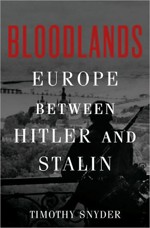
“This was the 1939 agreement between Hitler (Germany) and Stalin (Russia) where they agreed to non-aggression and to divide Poland between them. (It was named for the Foreign Ministers of both countries.) The areas of Poland that were invaded ended up with Russia after the war, and are now in…”
“As the subtitle suggests, this is the history of some of the wealthy Jewish people of American finance. It concentrates on a few of the big names – Joseph, Seligman, Walter Sachs, Jacob Schiff – and some of the big firms – Goldman Sachs, Lehman Brothers, Kuhn-Loeb. Jews left Europe because they…”
“ This was the region of Asia that eventually became Russia. It was named for the Moskva river, which borders the area to the west. From that grew the city of Moscow, which became the center of Grand Duchy of Muscovy. It was first mentioned in the 1200, and they fought off the Mongols in the 1300s. ”
“ Wonderful book on all the lies we’ve been told about how innovation happens. Well-written. Funny and witty, with scads of footnotes and historical references. ”
“This is really a coffee table book. I think I got it at Costco, but it’s beautifully bound with a cloth cover. I endeavored to read this, even though it’s not that readable – or even designed/intended to be read at all. I set my timer to one hour, and sat in a chair with nothing but the book….”
“Wonderful book about the history of D&D and role-playing in general. The author is a journalist, and the book is both an objective history and a personal reflection. The book is…tender, in places. It discusses the subject with clear emotional history and baggage, and I loved it for that. But hidden…”
“Chicago’s largest airport is named for Edward ‘Butch’ O’Hare. He was a Naval aviator during World War II. He’s most known for single-handing attacking nine bombers who were threatening his aircraft carrier. He shot down five of them. O’Hare was awarded the Medal of Honor. He was shot down by the…”
“This is a description or name applied to any painting from an known painter in Europe before ‘about 1800,’ according to Wikipedia . Merriam-Webster says: a work of art by an established master and especially by any of the distinguished painters of the 16th, 17th, or early 18th century But what’s an…”
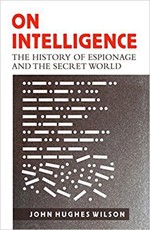
“Wonderfully interesting overview of intelligence, from human spies to spy satellites to computer espionage. Peppered throughout are small case studies of actual historical situations (Manning, Snowden, Ames, the USS Liberty, etc.). Very enjoyable. My only gripe is that the author injects personal…”
“This is an…eclectic history of paper. It starts where you would expect it to – somewhere in China, where paper was invented. The author traced the history while on a ‘paper history’ tour. But then the book goes to some fascinating places as it investigates the role paper has played in our lives, in…”
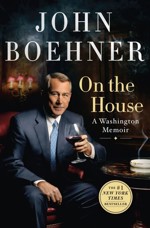
“This is not a sophisticated book. The author rambles. He tells stories. It jumps back and forth between time and scope. Subjects come and go and you never know what he’s going to talk about next. But this is a fun book. Boehner tells a great story. He swears a lot. He’s a good old boy. He’s met a…”
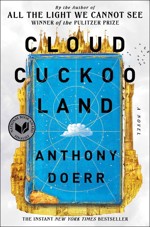
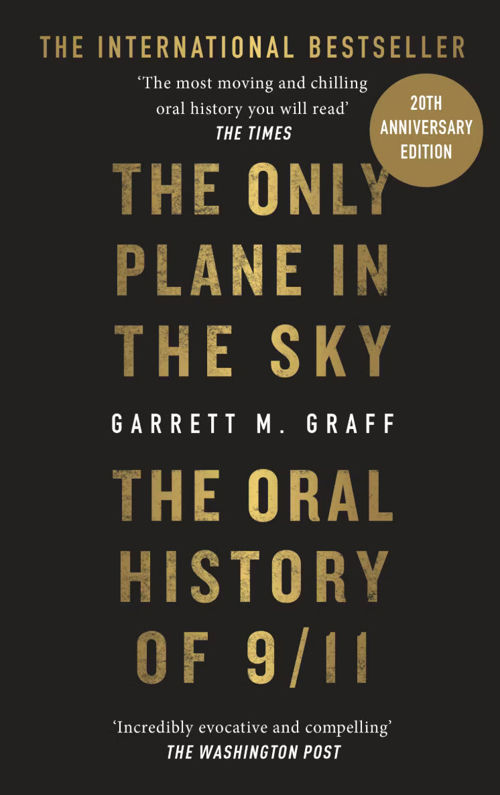
“This was an amazing…experience. I call it that because I listened to this book on audio during a long road trip. I loved it so much that I ordered the hardcover before I even got home. The audio version is read by a multi-voice cast of almost 50 voice actors. They need to do this because the book…”
“I read this on the recommendation of a friend. I knew nothing about it, but I’m trying to lean more on recommendations. It’s a novel, written in the 30s, though I didn’t know that at the time. I thought it was contemporary. It tells of a year in the history of the Oppermann family – a successful,…”
“O’Hare is built on what used to be an airfield complex called ‘Orchard Field.’ It served a Douglas manufacturing plant and an Air Force service depot. That’s where the ‘ORD’ comes from: ‘Orchard.’ When the city of Chicago needed more capacity than the original airport (now Midway), they purchased…”
“This is a fun book. It’s not gonna change your life or anything, but you’ll probably enjoy it if you accept it for what it is. It’s basically a series of short chapters – blog posts, essentially – describing some adventurer, from Charles Lindbergh to Christopher Columbus to Harriet Tubman to…”
“This was a communist government that seized control of Paris for two months in 1871. France was concluding the Franco-Prussian War at the time, and the only reason the uprising succeeded is because the army was outside of Paris. In fact, when the war concluded, the army marched back to Paris and…”
“I didn’t finish this book. I got through 3-4 chapters, then skimmed the rest. I couldn’t figure out what it wanted to be. The author compared to to Howard Zinn’s book of similar name, but I couldn’t see it. The book seemed to be very specific vignettes about the early age of computing in the 60s….”
“the author of this book makes a good point in the afterword: all facts promote or minimize a viewpoint, merely by their selection. So, choosing to retell or convey a fact promotes some point-of-view because that fact tells a story. And conveying that fact means you want to tell that story, and not…”
“It’s an alternative name for Iran. The term ‘Persia’ is considered a relic of ancient times by most, and usage of it usually implies a historical reference to Iran. In 1935, the reigning shah announced that the country would henceforth be referred to by its modern name of ‘Iran.’ This wasn’t…”
“This is an epic historical novel. It covers about 50 years in the life of a 12th century English town called Kingsbridge. It’s not fantasy – there’s no magic, no dragons, etc. The book represents actual life in the Middle Ages. The central conflict is the building of a cathedral in Kingsbridge….”
“I normally find things to research by reading books. This time I read a book because I wanted to learn more about a thing I was researching. I was writing this entry: Types of Aircraft Engines . I wanted to know more about the differences between turboprops and turbofans. So I found this book, and…”
“I read this for a nascent classics book club I have become a part of. Sadly, I didn’t like it. It was a long haul, and I wouldn’t have finished it if not for the obligation. The book is fundamentally about a whole slew of terrible things we should probably leave in the past. There are terrible…”
“This is the definitive history of oil, from the first discovery in the 1850s through the first Gulf War of of the 1990s. It’s a lot – 900-some-odd pages. Not for the faint of heart. I actually brought back in college in the mid-90s, and never finished it. I promised myself I’d get back to it, and…”
“I think I need to read this again. It’s complicated. The author is attempted to explain why war is so prevalent and violent in the Old Testament, but – on first reading, at least – it sounds like a very delicate skirting of the issue. If there was a central point or excuse, I missed it on the first…”
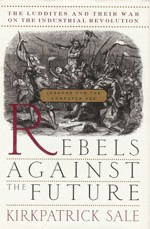
“This is a history of the ‘Luddite revolution,’ when textile laborers in central English destroyed machinery that was very rapidly taking their jobs. It’s where the general term ‘luddite’ came from, meaning someone who refuses to adopt new technology. I was surprised to find out that this all took…”
“This is a story of a bunch of hacks, which the author has strung together. The claim is that NotPetya, WannaCry, the Korean Olympic hack, etc. were all the work of the same organization – a Russian GRU hacking group nicknamed ‘Sandworm’ (the name came from the book ‘Dune,’ from which there were…”
“This is an absolutely compelling history of The Troubles in Northern Ireland. It’s fairly comprehensive, but it uses a single murder as a narrative hook. Jean McConville, a widow with 10 children, was taken from her house one evening and ‘disappeared’ – she was just never seen or heard from again….”
“This book is both fascinating and inadvertently funny. I found myself laughing with happiness (glee?) at some parts of it, contemplating what just might be an amazing prank that’s played out over hundreds of years. Way, way back in 1795, three Canadian teenagers found a depressed area of ground on…”
“This book is exactly what it claims – a magisterial history of intelligence and espionage. But, it left me a bit frustrated. (I wrote a blog post about this.) The book is a series of anecdotes, with no framework for understanding the larger issues of intelligence. It’s episodic – a series of…”
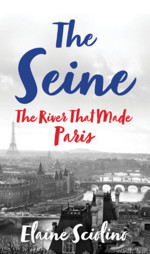
“This is a wonderful book, more for the format than the topic. First, the topic – it’s about a river. The Seine starts in southern France and flow northward through Paris to the English Channel. The book is all about this river. (I wasn’t actually interested in the topic, but there was a ‘Buy Two,…”
“Entertaining history of Nike from its beginning in 1962 through to when it went public in 1980. Those 18 years were run on a shoestring budget, and the company was constantly, hilariously broke. In the last chapter, Knight catches up to everything that’s happened since 1980. That sounds rushed, but…”
“Oh, goodness, I didn’t like this book. And I feel terrible about that fact, because it’s a classic, but I just didn’t. This is a long, long book. I’ve read comparably long books like The Covenant and The Pillars of the Earth , but this is both long and very, very boring. It’s set in 1600. John…”
“I read this because NASA’s Artemis mission was in the news, and I felt kinda of guilty that I don’t follow space much. It’s poor geek cred, I know, but outside of childhood, I’ve just never been that interested in space exploration. But my brother got me to watch an Apollo 11 documentary , and it…”
“This book lived up to its title – it was a short, competent history of India. That said, it suffers from a problem of any book dealing with ancient history – it can be hard to transition between time periods and know what’s factual and what’s legend. Consider: There’s a period with everything is…”
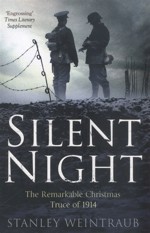
“I loved the idea of this book, but the reality was a mess. The problem with documenting the Christmas Truce (an actual event ) is that it’s told largely in legend. It was impromptu and distributed – it happened with no advance notice, and it happened all up and down the Ypres front. As a result,…”
“ A spectacular history of Asia. This is a book where I stopped tracking what page I was on, because I just wanted to keep reading it. Also a book that could have been boring, but the writing style is just effortless and wonderful. ”
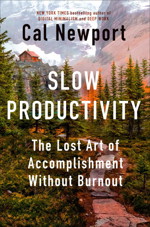
“I’ll basically read anything Cal Newport writes. After So Good They Can’t Ignore You and Deep Work , I was just hooked on the dream he offers – deep work, without interruption, toward tangible, consistent results. Mind you, it’s a dream I’ve never quite been able to reach, but I keep reaching for…”
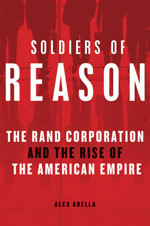
“The book is what it claims to be: a comprehensive history of RAND. The problem is that it’s just not that interesting. RAND (short for ‘Research and Development’) is a company created by the U.S. Air Force. During the Cold War, we were scared that the Russians were winning the military technology…”
“This book forced me to think about books about wars in general. I think I’ve identified four levels, in descending order of scope. Geopolitical: These books discuss the large-scale political reasons and ramifications of the war. Strategic: These books talk about large battles, and where the…”
“This is a history of Fred Koch and his sons. Fred started what would become Koch Industries. He had four sons: Frederick, who never took much interest in the business, never married, and apparently spoke with the author multiple times to insist he wasn’t gay Charles, who is the mastermind of the…”
“Honestly, I just didn’t get it. This book was described in near-mythical terms, but it seemed tedious to me. Maybe I’m just not used to hardware design, or I’m not an engineer anymore – I don’t know what, but the over-arching point of this was lost. There was some philosophy toward the end of…”
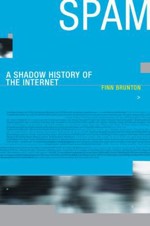
“This is a long look at the history of spam, in all its forms. Spam has a long history, from email to Usenet to social media to everything in between. The book has a nice general definition of spam: an abuse of someone’s attention. So, if someone is paying attention to something else, and you take…”
“The basic gist of this book is that the world is made up of (1) hierarchies, like governments and corporations; and (2) networks, like terror networks, the Freemasons, and old college buddies. We tend to think that power resides in hierarchical networks, but often the power is in the networks….”
“ Interesting, full of pictures, but it got ponderous. Weirdly long, because it’s basically a picture book, but with a lot of text, so you spend a lot of time starting and ending sections, and looking at captions. You don’t really get in a narrative flow. Almost a coffee table book, really. ”
“Despite the subtitle, which sounds vaguely sacrilegious, this is a pro-Christianity book. The author is a seminary professor. The gist is that modern Christians don’t understand how strange Christianity would have seemed to the Romans back in 100 AD or so. Roman culture was just not used to things…”
“This is a very famous book. It was written in 1962, then revised twice by the author, and then reissued on its 50th anniversary with a very long foreword (the author died in 1996). The book describes how science moves forward. According to the author, science exists in ‘paradigms,’ which are ways…”
“This is a very good book, but the title is pretty unclear. It really covers the history of sugar from one angle: slavery, or perhaps labor exploitation in general. It’s fair to say that slavery is a big part of sugar, for sure. And this book covers it up, down, and sideways. And that’s pretty much…”
“This is a book about a poem. It follows a book-hunter in the 15th century named Poggio, while he manages to save the last remaining copy of On the Nature of Things by Lucretius, which is an explanation of Epicurean philosophy. The poem makes lot of secular claims. In the middle of the book, they’re…”
“Much is made of the title and implied angle of this book, but – to be clear – this is a solid, comprehensive biography of Abraham Lincoln. The purported angle is this: once elected president, Abraham Lincoln appointed his main rivals for the office to important positions in his administration….”
“This is known mainly as a political scandal. Teapot Rock is an rock formation in Wyoming that (supposedly) resembles a teapot. It sits on top of an oil field that was discovered early in the 20th century and became known as Teapot Dome. The oil field was owned by the government as a Naval oil…”
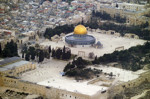
“This is a holy site in Jerusalem. It’s actually several overlapping sites, important to all three Abrahamic religions. The Template Mount itself is the claimed former site of Solomon’s Temple, which was destroyed twice – the last time in the years just after Jesus died. It’s a raised plaza – kind…”
“This is a recounting of the First Barbary War. That event is important because it was the first overseas conflict the young United States ever fought in. (From the Marine Corp hymn: ‘From the halls of Montezuma, to the shores of Tripoli…’ The ‘shores of Tripoli’ happened in the First Barbary War.)…”
“Wonderfully written biography. Makes me want to read more Chernow. JDR was a flawed man, certainly. While an upstanding citizen in his personal life, he was a ruthless business, who destroyed his competitors with glee. Provoked some wonder at the line between the personal and professional. Can…”
“This is the story of one week in 2008 – the week when Lehman Brothers was about to fail, and then almost everything went with it. It was the week that ended with TARP – the $700 billion Wall Street bailout package. And to be clear: this is 600 pages about that one week . It’s a nauseatingly…”
“Really enjoyed this book. The author decided he wanted to ‘visit the Internet.’ The…physical Internet. Each chapter is a look at some physical manifestation of what makes the Internet go, from Internet exchange points to undersea cables to data centers. Along the way you work with road crews…”
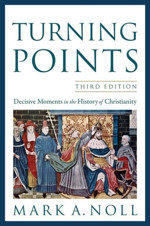
“This book traces the history of Christianity by defining 12 ‘turning points,’ which are pivotal moments in its development. These range from the Council of Niceo, to the Reformation (the Diet of Worms, actually), to the Edinburgh Mission conference in 1910. It was a good book, and certainly…”
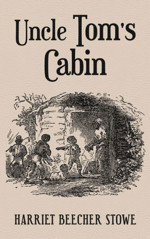
“This is a novel from 1851 designed to reveal the horrors of slavery. And it worked – it caused outrage across the United States and pushed the country toward the Civil War. The author, Harriet Beecher Stowe, was prompted to write the novel by the passage of the Fugitive Slave Act of 1850, which…”
“Let’s get the format out of the way: this book is presented as a conversation between a Christian Black man and a Jewish woman. The man is a sportscaster and the woman is a Jewish activist. It is supposedly their dialectical about the struggles of being Jewish in the world today. Some years ago,…”
“Truly, one of the most perfect books I have ever read. I wanted a comprehensive history of the NBA, and that’s what got, with style and beauty to go along with it. The history is organized well, the writing is superb and goes beneath superficial observations, and the artwork is just amazing – like,…”
“Enormously entertaining history of the Vanderbilt family by CNN’s Anderson Cooper, who was a Vanderbilt on his mother’s side. Cornelius ‘Commodore’ Vanderbilt was a self-made man. He started ferrying people on a small boat around New York Harbor and ended up becoming the richest man the world had…”
“A wonderful history of the telegraph which proves that all of the ‘novel’ problems the Internet brought about actually happened 150 years earlier. Standage pays special attention to the societal changes that the telegraph wrought, and the effect it had on the lives of the telegraph operators who…”
“This book has one purpose: to persuade you that Vienna is responsible for a shocking amount of the world’s progress in the 19th and 20th centuries. The authors make a case that a lot of the most influential figures came from Vienna. There are too many names in the book to keep track of, so I asked…”
“What can you say about this book that has been said a million times? it’s many things in one: a novel, a history, a philosophy, etc. I enjoyed reading it. It took me 50 days of fairly consistent reading – 30-60 minutes per day. The chapters are quite short, taking maybe five minutes, so I always…”
“The title promised a discussion about how the 60s ‘shaped’ the personal computer industry, but I just didn’t see it. The book is a history of technology and how the seminal figures of that period interacted with culture, but it didn’t show me how society ‘shaped’ the industry, as much as the…”
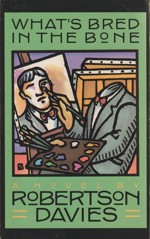
“Robertson Davies is apparently a very famous Canadian novelist. The fact that I didn’t know this is not surprising, I guess. I was visiting a friend in Ottawa, and we went to a local bookstore. He handed me this and told me to buy it. He said it was required reading for most Canadian high school…”
“This book is good if you want a long, detailed history of the ARPANET, the direct predecessor to the Internet. For that, it’s fascinating. That said, it’s not a casual reader. I’m neck-deep in the Internet every day and am a fan of Internet history, and even I got bored in places. Still, if you…”
“This is the story of class in America. Specifically the ‘lower’ class. In contrast to the Utopian image of Colonial America, the early years of the country were marked with extreme poverty. Before the slave trade geared up, most of the people sent to the New World were poor white people,…”
“This has two common meanings, one depending on the other. Just after World War 2, ten veterans and their commander went to work at Ford. They had all served in the Army during the war in a unit called Statistical Control, which broke new ground in information management for logistics. After the…”
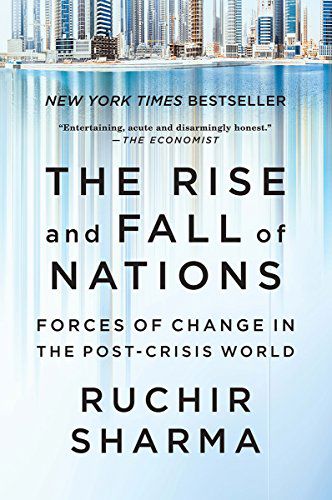
“Tedious book. Seemed a bit scattered. The gist appears to be that the biggest reason nations fail is because of unfair, ‘extractive’ institutions, like dictatorships, that give people little incentive to work and are designed to enrich a few. The book goes on about this for 460+ pages, with example…”
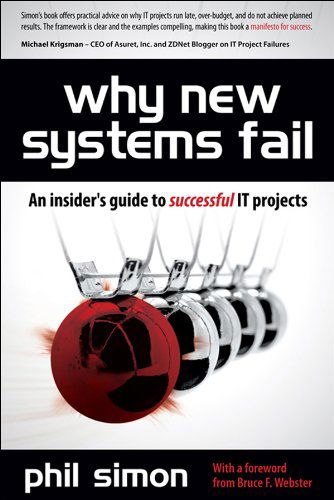
“This is a good look at why a lot of IT projects and implementations don’t deliver. The author is a consultant specializing in ERP, and he details a litany of disastrous project implementations and what went wrong. The book is more of a guide to implementations. It almost details failure causes…”
“I feel guilty saying that I ‘read’ this book, because I abandoned it after about 100 pages. I just didn’t understand what the author was getting at. This bothers me, because I enjoyed Guns, Germs, and Steel , which is Diamond’s more famous work. The first chapter was a long discussion of his…”