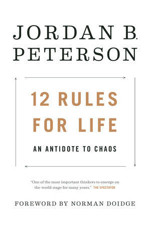
“I don’t disagree with the author’s advice (the 12 rules themselves are just good common sense), but his writing style did not fit with me. He meanders, and tells stories that are way, way removed from the point he’s trying to make. There were multiple moments when I had to stop and try to figure…”
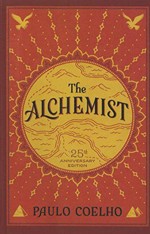
“This is a fable. It was written by a Brazilian author in 1988, and has something of a cult following. A friend recommended it. It’s a story that’s also intended as self-improvement (I think…?). It’s about an ancient Spanish shepherd who travels into Africa to find his destiny. He has a dream about…”
“This book was written in 1985. The author died in 2003, and this is a second edition published posthumously in 2005. I don’t know if anything was changed, but it has an introduction by the author’s son (also an NYU professor, I gather). The author doesn’t like television, and he argues for about…”
“I abandoned this, so I won’t rate it. This book is a set of short chapters (101 of them) which are exercises meant to expand your perception of the world (?). I got through 5-6 of the chapters, but it’s very odd. The exercises are extremely abstract and vaguely spiritual. Some examples: Sit in a…”
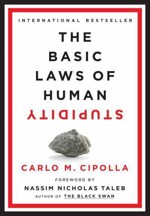
“I heard about this book in a news article, but I don’t remember which one. The title intrigued me, because I like anything that tries to distill humanity down to patterns or rules. Then, I was in a Daunt Books in London, and I saw it at the checkout register, so picked it up. I started reading it,…”
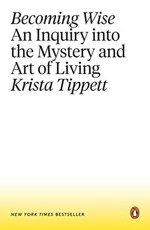
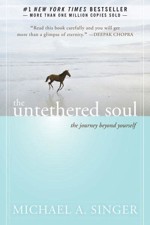
“I had to stop reading this. I gave it fully 100 pages, but just couldn’t figure it out. I don’t know what the point of the book is. It’s some kind of metaphysical treatise about…something. Given the title, I assume the writer was trying to explain how we develop some higher level of awareness, but…”
“The book is weird. It’s not about ‘code,’ really. It’s about human representation in code. It’s really about how humans relate to code, and about how humans are represented as code. Two chapters in the middle are representative, and neither have anything to do with code – One discussed the…”
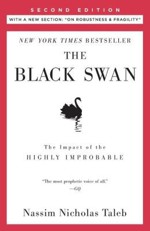
“This book could literally have been written in 25 pages. I find Taleb incredibly narcissistic. He doesn’t say anything in 1 word that could be said in 10, and his main goal seems to be on injecting himself into the text so we all know how smart he is. There’s a decent point here, but be prepared to…”
“Okay, let’s get this out of the way: I didn’t understand 90% of this book. And I don’t think most other people will either. My question is this: can you not understand a book, but still get something out of it? Yes, I think so. To be clear, just because I didn’t understand the entire book, doesn’t…”
“A good examination of why people spit BS, and how to debunk it. It drifts into a standard list of cognitive fallacies and statistical mistakes somewhere in the middle. But still, it’s generally very good. The author makes a point that some people’s identity hinges on their BS (like any member of…”
“A lovely book that acts as a survey of the wide world of disciplines and research that could fit under the banner of ‘complexity.’ There are a lot: network/graph theory, cellular automaton, self-organization systems, Turing machines, power laws, evolution, etc. Mitchell covers each one, and circles…”
“I enjoyed this book, which is more of a rebuke of President Trump than anything else. I agreed with most everything in it, and Flake makes his case well, though I don’t know what other purpose the book serves. I didn’t really learn anything new, except that there are Republicans who explicitly…”
“I’m giving this five stars just because it’s so comprehensive, and I applaud the detail of the work. But…it’s a lot. Perhaps read this blog post from Kirk Center: Ten Conservative Principles This is the crux of Kirk’s argument. This book is simply a long historical survey of the basis and…”
“I know this is a classic, but I didn’t really enjoy it. It’s the story of an idiot who commits a murder. And when I say ‘idiot,’ that’s not flippant – he’s written that way. The character is a failed student living in Saint Petersburg in the 19th century (I think it was called ‘Petrograd’ back…”
“This is a nice little introduction of logical fallacies, with examples of how we encounter them in real life. Each chapter is an introduction to a category of fallacies, and then it’s further broken down into specifics. The author covers things like Post Hoc fallacies, refutation by reputation, ad…”
“I have wanted to read this book for ages. I have a weird fascination with urban planning, and this book is held up as seminal. It’s from the 60s, and was written by the legendary Jane Jacobs. What I find interesting about the book is where it starts: with a chapter on sidewalks. I remember…”
“I read this on a friend’s recommendation. I’m trying to read more fiction. I enjoyed it. It’s a young adult novel, so you get the familiar tropes: adolescent facing a major choice, problems with authority, dark forces swirling in the background, a hopeless romance, etc. But it’s put together well,…”
“This book makes the case that (1) the world is better now on almost every quantifiable dimension than at any other time in its history, and (2) this is because of the decline of religion. Pinker’s main point is that religion is bad and makes the world a worse place, and the improvement in life over…”
“I gave this book every chance, I really did. I didn’t abandon it, but I skipped around a lot. It’s purportedly about postmodernism . Or, perhaps about a history of how we ended up postmodern? I wasn’t sure. Each chapter was basically a history of many things, often pop-culture. I would read a…”
“This book wasn’t what I thought it was. I found it in a Hacker News thread about ‘books that made you look at the world differently.’ Also, I kinda thought it was about game theory, which I’m genuinely interested in. This is a book about philosophy. The author posits that there are two types of…”
“I have no idea why I bought this book. Honestly, I don’t even remember buying it. The book is a … call (?) to a new future. I think the title refers to events in the past that resemble current events, or how our future should turn out. I know that sounds confusing. However, I can’t categorize the…”
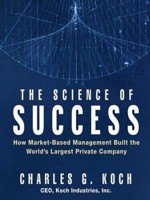
“This both a history of Koch Industries and the details of a management philosophy that Charles Koch calls ‘market based management’ (MBM). The book is at its best when he’s explaining some of the history of the company and demonstrating principles via specific examples. Two drawbacks: (1) Koch…”
“This is an incredibly idealistic book that will never be read by anyone who needs to read it to bring its dream about. I thought it was a book about accepting imperfection in one’s own life, a la Four Thousand Weeks . However, it’s really a book about how the entire world should accept less than…”
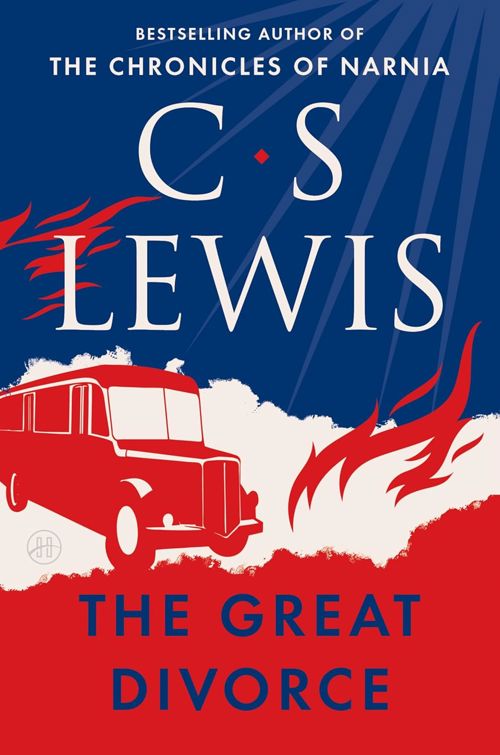
“Although regarded as a classic of the Christian faith, this is actually a novel. It’s a short story of a man who is living in a gray, depressing town. He catches a magic bus which takes him to an amazing land in the sky where he watches a series of interactions between ghosts and spirits. The…”
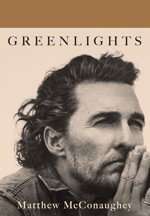
“I very much regret not getting the audiobook. It would have been spectacular to listen to the author read this. This is a memoir. It was made out to be more than that because (1) the cover is funky, and (2) it has a lot of pictures of artifacts (?) of McConaughey’s life, but make no mistake – this…”
“The author claims that we’ve steadily expanded the idea of ‘war’ so that we’re technically always at war, and the military is being asked to do so many things, many of which have nothing to do with actually fighting a war. She writes well, but the book got long, and the point got really abstract…”
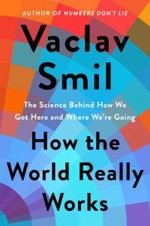
“The author is a physicist, and he attempts to explain how the world really works, meaning what’s is utterly necessary for humans to survive as a species. For example, he explains why we need ammonia. Because we use it to make fertilizer ever since the Haber-Bosch process was established, and…”
“I love Steven Johnson. ‘Where Good Ideas Come From’ is one of my favorite books. This book looked back at 5-6 ‘inventions’ that remarkably changed the modern world. I quote ‘inventions’ because these things are really, really basic. So, things like ‘cold’ (meaning, the ability to make things…”
“So, here’s the thing: I shouldn’t have read this book. More importantly, I should have stopped reading this book when it became clear that it would never make sense. But I didn’t. Back in the 80s, I was a fan of a card game called Illuminati by Steve Jackson Games. I was reading about it one day,…”
“I originally thought this was just the transcript of The Last Lecture video, but it’s more than that. It’s an expansion of the principles Pausch discussed in TLL, which basically becomes a book of life advice. Some of it is good, some of it is obvious, but it’s a quick easy read. If you’ve seen the…”
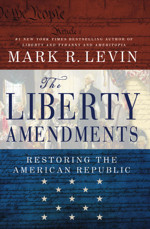
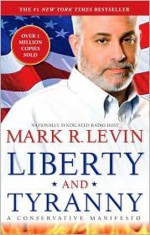
“This is the second of Mark Levin’s books that I’ve read, after Liberty and Tyranny . Levin, of course, is the firebrand right-wing radio show host. He’s considered one of the most aggressive , according to Wikipedia. Like his other book, Levin uses the word ‘Statist’ to describe someone who he…”
“I loved the title and subtitle of this book. I was enamored with the idea of an ‘intellectual life.’ And this is a neat thing. I mean, we have love lives and social lives and sex lives, but how many people talk about an intellectual life? I feel like I have this, but I never really had a word for…”
“I’m not rating this because it wasn’t what I expected, and so I don’t know how to rate it. This is a book for linguists and perhaps psychologists. This is not a book for writers, and this is not a book for laypeople. This is a very dense, abstract book for people who think very abstractly and…”
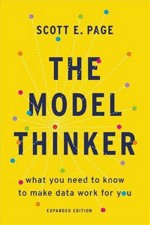
“This is literally a textbook – the author says much at the beginning. He’s a professor at the University of Michigan, and he writes about how a friend asked him to resurrect a course on statistical modeling. That course became this book. Models are ways of thinking and analyzing a subject. It’s a…”
“ A very deep, theoretical book on the design process, and on matching a solution to a problem. This one isn’t for the faint of heart. It attempts to distill the design process to math, almost. I got a little lost towards the end, but I love a deep dissection of a process like this, so it was fun. ”
“This is a book of essays – short chapters that have nothing to do with each other, though they are somehow grouped into sections. I have never read a book of essays. And this is not a book that I would have picked up, but a friend sent it to me. I had sent the friend a different book years ago. He…”
“There are four major arguments for the existence of God. This is the hardest one to grasp and the easiest one to forget. This is the only argument of the four which is based strictly on logic, rather than observation. In its simplest form, it boils down to this: because we can imagine God, He must…”
“I tried to understand this, but it went so, so far over my head. I’ve been working on the web for 25 years. I have a minor in philosophy. Neither of those things helped. I got about halfway through it before giving up. It’s dense , man. I feel badly for not sticking it out, but at the end, I was…”
“This is more of an essay, than a book. It’s quite short. It reads a bit stream-of-consciousness, with no chapter headings. Each chapter seems to have a cultural theme, but I’d be lying if I told you they were perfectly clear. The author – Dan Fox, editor of a literary and art magazine – seems to be…”
“This was a good book, though not quite what I expected. I guess I didn’t expect anything, but the introduction didn’t quite set the book up for what it was. The intro discusses a radio show replay the author heard. It was an episode of ‘Command Performance’ that happened right after V-J day back in…”
“This is a fairly awful book. I didn’t disagree with anything Koch wrote, but the problem is that (1) he’s a poor writer, and (2) he’s not saying anything profound. His writing just careens back and forth between points. I was trying to highlight the book and take notes, but it just defies logical…”
“I like David Brooks. I like how he writes. It flows nicely. And this is good, because this book doesn’t really go in a straight line. It meanders. It wanders around a point, completely unfocused. ‘The First Mountain’ we climb is superficial success – money, job, romance. ‘The Second Mountain’ is a…”
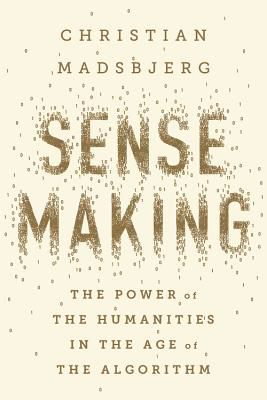
“The idea of this book is that you have to understand a situation or group of people from the ground up to make decisions about them. The author is the CEO of a company that specializes in what they call ‘sensemaking’ – they do workshops and research (an ethnography ) to help companies understand…”
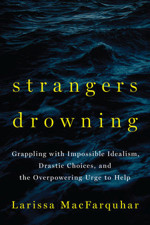
“This is a book about Do Gooders – people who are compelled to help other people, often to a fault. The book is a series of stories about these people. These are people that sacrifice their happiness and sometimes their lives, to make life better for others. The book is a study in some of these…”
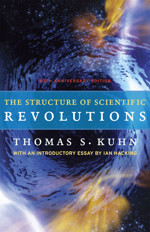
“This is a very famous book. It was written in 1962, then revised twice by the author, and then reissued on its 50th anniversary with a very long foreword (the author died in 1996). The book describes how science moves forward. According to the author, science exists in ‘paradigms,’ which are ways…”
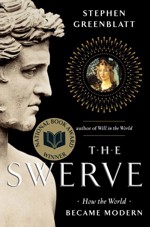
“This is a book about a poem. It follows a book-hunter in the 15th century named Poggio, while he manages to save the last remaining copy of On the Nature of Things by Lucretius, which is an explanation of Epicurean philosophy. The poem makes lot of secular claims. In the middle of the book, they’re…”
“This is kind of an odd little book. It was first published in 1955, and it’s a guidebook to life, basically. It covers things like personal development, relationships, goal-setting, etc. Lots of basic, obvious stuff, which has been covered in countless books since then, but I wonder how novel this…”
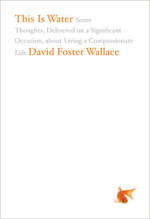
“This is simply the text of David Foster Wallace’s famed commencement speech given at Kenyon College a few years before he took his own life. What’s interesting is the format – it’s a tiny book (the speech is fairly short), and each sentence is on it’s own page. Seriously – an entire page is each…”
“This was recommended by a friend. I assumed it was straightforward self-help, but it’s something very different. It should be classified as ‘New Age.’ There’s a lot in here about ‘spiritual energy,’ which does nothing for me. I was willing to overlook that, but then the author started to make…”
“This is a ‘meditation book.’ It takes a subject – cars, in this case – and offers a series of essay about them. There’s not much rhyme, reason, or thematic flow to it. It’s just a collection of writings. I felt like it meandered quite a bit – I couldn’t figure out what the author was getting at….”
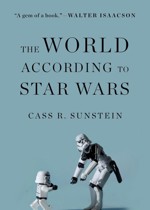
“This book is odd but lovable. I can’t imagine how it got written. It’s about Star Wars . But not about any particular aspect of Star Wars . Rather, it’s a meditation about the…ideas (?) of Star Wars ? The book was written right after The Force Awakens was released. That was the first film in the…”