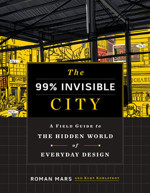
“A lovely collection of blog posts about all the hidden stuff in your city. Why lampposts are shaped the way they are. Why manhole covers are round. What the markings on sidewalks mean. It’s a great reader – every ‘chapter’ is really just a blog post or podcast episode, so you can read 4-5 of them…”
“It’s for the National Guard. Many cities have buildings that were built to house the local National Guard’s equipment (including weapons). Hence, this became known as ‘the armory.’ In many cases, these buildings are no longer used for those purposes – the National Guard unit has moved into other…”
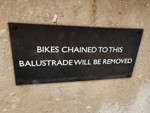
“Basically, it’s a railing of some kind, like those on a balcony or open staircase. Technically, the balustrade is the horizontal part (where your hands would rest), while the vertical parts are called balusters (the balustrade sits atop of the balusters). It comes from an Italian word for the…”
“This is a large, Gilded Age home in Ashville, North Carolina. It was built by the Vanderbilts in the early 1890s. It would technically be the largest private residence in the United States at 135,000 sq. ft., but it’s been a museum since the 1950s. It’s owned by a private company, open to the…”
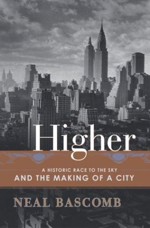
“This is a lovely history of New York City, focused down to a single street. It follows Broadway north from the southern tip of Manhattan, mile by mile, and talks about the history of the city as the street moved northward. Along the way, it has random vignettes of things that happened on the…”
“In it’s strictest terms, this is simply a physical element that’s only connected to a large structure at one end, so the other end ‘hangs out in space.’ Architecturally, a cantilever is a building structure that protrudes into open space, such as a balcony. A great example is The Guthrie Theater…”
“ It’s literally Greek for ‘empty tomb.’ Many times, it’s a monument to a group of people who died, made in the form of a tomb to memorialize them. There’s a vague, blurry line between a cenotaph and a regular memorial. Linguistically, ‘cenotaph’ is considered a hyponym or subtype of ‘monument.’ ”
“A magisterial history of the Hoover Dam, all the way from the problems of the late 1800s that it was meant to solve, through the arguments during its planning, to the construction and beyond (in fact, they don’t even start building the dam until halfway through the book). The Hoover Dam was an…”
“I have wanted to read this book for ages. I have a weird fascination with urban planning, and this book is held up as seminal. It’s from the 60s, and was written by the legendary Jane Jacobs. What I find interesting about the book is where it starts: with a chapter on sidewalks. I remember…”
“This is a zoning code formula that compares the total floor size of a building (all floors together) to the lot size it’s built on. There are rules around this number. For example, if I want to build a 100-story building with each floor having 20,000 square feet of space, that’s a total of 2…”
“Lots of churches are named ‘Hagia Sofia,’ it turns out. The phrase is Greek for ‘holy wisdom,’ which can apply to a lot of things. The Hagia Sofia is a mosque in Istanbul. It was originally an orthodox church, then a Roman Catholic church, then a museum, and now (very recently) it’s a mosque. When…”
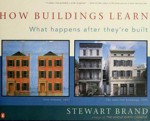
“this is a wonderful examination of an interesting topic: how do buildings change over time? How do they age? How are they modified? This is something I’ve never really considered. I guess I new that buildings get remodeled, but the dynamics of that remodeling reveals things about the building and…”
“This is a very (very!) big coffee table book of library photography. I’m not sure there’s much more to say than that. It’s enormous. It probably weighs 10 pounds. The photography is amazing. The pages are so big, it’s absorbing. However, it’s worth pointing out that a lot of libraries are very,…”
“Basically, the ‘lobby’ of a Christian church. From Wikipedia: […] the entrance or lobby area, located at the west end of the nave, opposite the church’s main altar. Traditionally the narthex was a part of the church building, but was not considered part of the church proper. There was a specific…”
“ A very deep, theoretical book on the design process, and on matching a solution to a problem. This one isn’t for the faint of heart. It attempts to distill the design process to math, almost. I got a little lost towards the end, but I love a deep dissection of a process like this, so it was fun. ”
“Originally, ‘penthouse’ referred to a small building on top of another building. From the French word apentis for ‘attached building.’ The penthouse was literally on the roof, set back from the walls of the building. Thus, the person occupying the penthouse got the benefit of usage of the flat…”
“This is an epic historical novel. It covers about 50 years in the life of a 12th century English town called Kingsbridge. It’s not fantasy – there’s no magic, no dragons, etc. The book represents actual life in the Middle Ages. The central conflict is the building of a cathedral in Kingsbridge….”
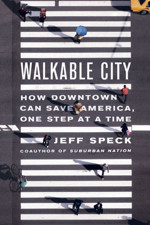
“I’m reading Walkable City , by Jeff Speck (who recently spoke at the Plain Green Conference , part of which I attended). In it, he talks of ‘induced demand,’ which he says is the thing that everyone in city planning understands but doesn’t talk about. Basically, if you build it, they will come. He…”
“Genuinely one of the most interesting books I’ve ever read, hands down. Speck explains why and how our cities started being designed first for cars, then for people, and why this is bad. Then he gives us 10 ways to change it, from increasing pedestrian safety, to fixing parking, to making the…”
“A solid book that’s an introduction to engineering. It explains – in the clearest, simplest way – how buildings stay upright. It talks about loads, materials, and different ways of organizing those in a never-ending war with gravity. Along the way, the book looks at some historic structures and why…”