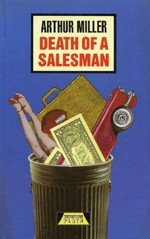
“A principle of fiction that says every story element has to matter to the overall plot, and if something doesn’t further the plot, it should be removed. The principle is often stated as: If a gun appears in Act One, it better go off in Act Three. The original reference was by the Russian playwright…”
“ Clearly a great play, but hard to read. You know what’s coming all along, and you sort of dread it the entire time. I got a feeling of impending doom throughout the entire thing. It was hard to pick back up – I just didn’t want to confront it. I’m frankly glad it’s over. ”
“Great novel. Does not read like it was written 121 years ago. Genuinely terrifying in parts. Suffers a bit in the middle as the characters run around London, and I got a little confused as to what they were doing. It turns into a bit of a detective story. I got the main gist of what was going on,…”
“ This is a line from Act 1, Scene 2 of Shakespeare’s play Julius Caesar : The fault, dear Brutus, is not in our stars, But in ourselves, that we are underlings. Cassius is trying to explain to Brutus that their current lives were not due to fate (‘not in our stars’). ”
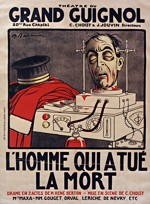
“This is technically French for ‘great puppet,’ but it usually refers to a theater in Paris called Théâtre du Grand Guignol (‘The Theater of the Great Puppet.’) It was known for its realistic, gruesome horror shows. Each performance would be several short plays. Here’s a description from a 1957 New…”
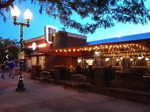
“ Clearly, Broadway in New York City is an example of this. However, I suppose it could apply to any ‘entertainment district’ of a city – even a couple blocks Phillips Avenue in downtown Sioux Falls. Wiktionary just has this for etymology: So called from its brilliant illumination at night. ”
“This is a phrase commonly known to mean ‘jealously,’ but I’m having trouble figuring out why it means this. Shakespeare used the phrase at least twice. In Othello : O beware, my lord, of jealousy; It is the green-eyed monster which doth mock the meat it feeds on. In The Merchant of Venice : How all…”
“This is a stock character originating in Italian theater of the 17th century. It’s generally the equivalent to the court jester – a Harlequin is often a servant, known for quick wit, comedy, and getting themselves into complicated situations. The Harlequin is usually depicted in a diamond-patterned…”
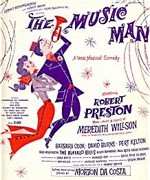
“ This was the main character of 1957 the musical The Music Man . Hill is a conman who takes money from townspeople with the promise to create a youth band, but intends to abscond with the funds. ”
“People often talk about ‘stage right’ and ‘stage left’ in the theater. I know from play production class that this is from the perspective of the performer facing the audience, so it’s the opposite of what the audience sees – ‘stage left’ would be the audience’s right. It turns out there’s an…”
“This is the story of several things, simultaneously. Most prominently, it’s the story of Percy Fawcett, an explorer from England who ventured into the Amazon twenty-some-odd times. He was utterly convinced there was a lost civilization somewhere therein, which he called ‘Z’ It’s also the story of…”
“For the record, I didn’t read the raw play, but rather the book ‘The Merchant of Venice’ by Modern Library. This book has the script, a scene-by-scene analysis, and about as much commentary from directors and actors who have staged the play. I supplemented this by watching the 1974 TV special with…”
“Wonderful play. I continue to be amazed at Shakespeare’s ability to write about the human condition, and have those observations be perfectly relevant 400 years later. As with The Merchant of Venice I approached this holistically. I read the play first, which was difficult, then read a…”
“ This related to the size and location of the theater. Broadway : a theater of greater than 500 seats in the theater district of New York. Off-Broadway : a theater of between 99-500 seats, not necessarily in New York Off-Off Broadway : pretty much anything else ”
“I read this for a nascent classics book club I have become a part of. Sadly, I didn’t like it. It was a long haul, and I wouldn’t have finished it if not for the obligation. The book is fundamentally about a whole slew of terrible things we should probably leave in the past. There are terrible…”