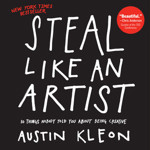
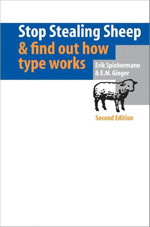
“First of all, what a terrible name for a book. I mean, I get the acronym, but still – why call a book this? That said, this is a great book. It’s as practical a guide to writing and self-publishing a book as you’re ever going to find. It’s not a motivational book, either – it assumes you can write…”
“This book is a vague manifesto for change. The author is a lawyer that was appointed to some commission to study libraries, and this book feels like the result of his research. He’s essentially pushing for libraries to de-emphasize physical collections, and emphasize the role of librarians and…”
“So, this book didn’t teach me anything new, but it was interesting, and had some good information about early Internet history, which I appreciate. The book has a chapter on each of a variety of ‘dark’ things that the Net plays host to: Trolling Racism and Hate Groups Bitcoin and Crypto-Currency…”
“I’m rating this five stars because it accomplished everything it set out to do, but books like this really defy rating. This is a procedural book. You’re meant to have this open while you do stuff. There’s not a lot of words – it’s largely screencaps and code listings. Books like this also become…”
“So, here’s the thing: I shouldn’t have read this book. More importantly, I should have stopped reading this book when it became clear that it would never make sense. But I didn’t. Back in the 80s, I was a fan of a card game called Illuminati by Steve Jackson Games. I was reading about it one day,…”
“This stands for ‘International Standard Book Number.’ It’s meant to uniquely identify a printing of a text. These are issued from the International ISBN Agency . They are sold through resellers, specific to each country. The number has grown: The 9-digit British ‘SBN’ was created in the late 60s….”
“This book explains the book publishing industry, from the inside out. It starts with the authors, explains why they need agents, explains how the agents work with the publishers, and publishers with the distributors, the distributors with the retailers, etc. It does a masterful job of explaining…”
“This book is not about zines. (A ‘zine’ is an amateur, home-published ‘magazine’). The subtitle is key here: this is about the culture of zines. It’s not a how-to. It will not teach you how about make or distribute zines. It’s really about the people who make them, and why they do it. The author is…”
“This is one of those motivational/inspirational type books. It doesn’t really present a lot of new information, and it’s formatted all funky with weird fonts and colors and stuff (a la Tom Peters), and it’s really short – you can read it in 30 minutes. The goal is to impress upon you that it’s okay…”
“I can’t recommend this book. It’s a little ironic that the biggest problem with a book on type is its format. The book is divided into chapters, but each one is essentially a collection of mini-essays. In each two-page spread, the left page is an image of some kind, meant to illustrate what the…”
“This is not a book you would ‘read.’ It’s a book you browse, really. It’s a reproduction of an early 20th-century instruction manual on how to become a typesetter. Typesetting was the process of arranging small blocks with raised letters (‘movable type’) on a plate for use in a physical printer….”