“This is soil that has been deposited by water. If, at some time in the past, an area of Earth was covered with water due to a prior river or flood, that water would deposit sediment that remained once the water is gone. This sediment is known as alluvium, and is known to be very agriculturally…”
“A good primer to the field. Hits the right depth between technical and theoretical layers, including quite a bit on ethics. My takeaway is that we’re really, really far away from anything approaching what we think artificial intelligence was going to be. The key is that there’s a difference between…”
“Not sure what to do with this book. I abandoned it about 2/3 of the way through, because I felt like I was over my head and wasn’t understanding anything. But, I was determined to ‘break it’ (see this review of an explanation of that term). So, I dove back in, reading the introduction and…”
“This book is a vague manifesto for change. The author is a lawyer that was appointed to some commission to study libraries, and this book feels like the result of his research. He’s essentially pushing for libraries to de-emphasize physical collections, and emphasize the role of librarians and…”
“This is a book about pooping. Not personally, but as a species. How we deal with our poop, around the world. It’s what I call a ‘vignette book.’ Over 10 or so chapters, the author tells disconnected stories that each explain some aspect of the story of poop. Examples: The World Toilet Conference…”
“Okay, let’s get this out of the way: I didn’t understand 90% of this book. And I don’t think most other people will either. My question is this: can you not understand a book, but still get something out of it? Yes, I think so. To be clear, just because I didn’t understand the entire book, doesn’t…”
“This book just wasn’t for me. This book is about when famous scientists make mistakes. For example, Darwin misunderstood some critical aspect of heredity. And someone else got the age of the Earth wrong. When this happened, big scientific arguments ensued. Letters were exchanged. Conference…”
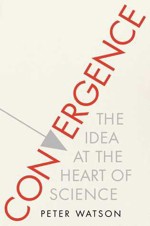
“I really shudder at the thought of what it took to write this book. There’s just so much here. It’s a comprehensive history of science in the 20th century, and even earlier. The basic idea is that the science seek to converge. There’s a movement in the scientific community to get scientific…”
“A branch of astronomy that deals specifically with the origins and chronology of the universe. Physical cosmology deals with the actual origins of the physical universe, while religious or mythical cosmology deals with the purpose and reason for the universe. It comes from the Greek ‘kosmos’ which…”
“I read this because I’m a fan of Francis Collins, who is the current head of the NIH, a devout Christian, and who wrote one of my favorite books about faith: The Language of God . This is the story of the Human Genome Project, which was something I was only vaguely aware of. I’ve never been…”
“This is the story of the floor of the ocean, and all our attempts to map it. Turns out, we know nothing relatively little about it. The framework of the book is that the author got to travel on the Five Deeps expedition. This was a project of adventurer Victor Vescovo to travel to the deepest…”
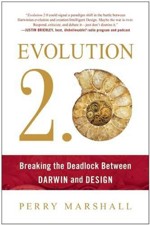
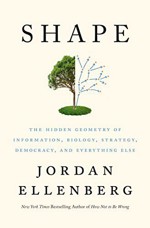
“This is not a book for the casual reader. A lot of this went over my head, but I managed to maintain a loose grip on it until the end. Essentially, the author is arguing for the inclusion of information science along with physics, chemistry, and biology as the disciplines that deal with the origins…”
“This book was written by a physician and medical researcher. I’s a polemic against shady ‘alternative medicine’ practices and health conspiracy theories. To be clear, the author isn’t against more mainstream…alternative (?) stuff – things like chiropractic, essential oils, CBD, etc. What the author…”
“In the scientific method, each experiment should have two groups: The Experimental Group: this is the group on which a new variable is added The Control Group: this is the group where nothing changes – it is missing the variable introduced to the experimental group The goal is that the variable…”
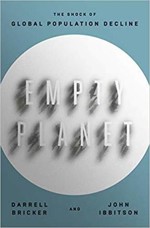
“Apparently the population of the planet will start to recede very soon. As sexual education and contraception gains hold around the world, birth rates are dropping below the 2.1 required to stabilize the population. This book is fundamentally about demographics, the changes that have brought us to…”
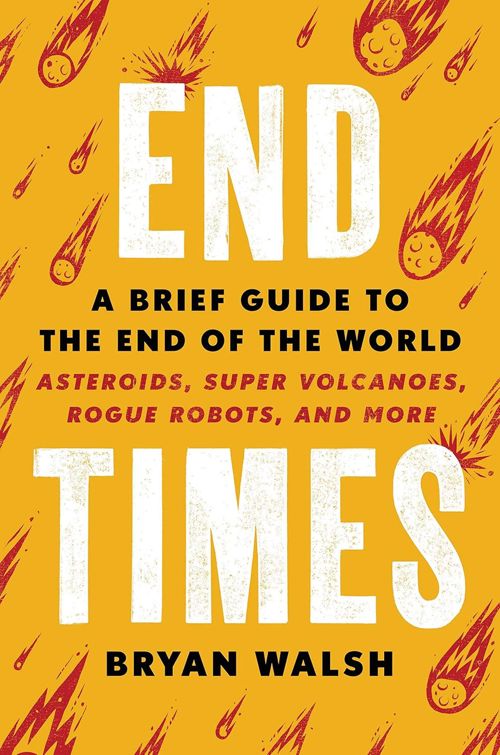
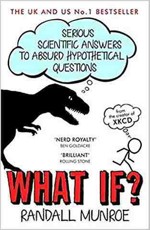
“I enjoyed this book, for what it was. I’m trying to get better about predicting the content and tone of a book before reading it, so I can better absorb it. I correctly predicted this one as a fun trip into some morbid scenarios, and that’s what it was. The author covers all sorts of ways the world…”
“This book makes the case that (1) the world is better now on almost every quantifiable dimension than at any other time in its history, and (2) this is because of the decline of religion. Pinker’s main point is that religion is bad and makes the world a worse place, and the improvement in life over…”
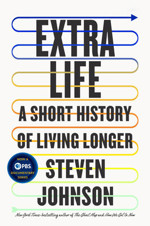
“I love Steven Johnson. He’s one of my favorite authors. He writes mainly about the history of science and technology. This book is about the history of how we began to live longer. The average lifespan has gone up so much in the last couple of centuries, and what caused that? Here’s the list:…”
“Hans Rosling is a legend in statistics and health research. He died a few years ago, but his YouTube videos and TED talks live on. He studied health and living trends around the world, and created a unique way to visualize them. His talks usually involve him pointing at bubbles which move around a…”
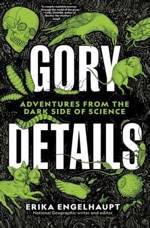
“This is apparently a blog by the science editor for NPR. She took a bunch of blog topics and wrote a book which is a collection of chapters about gross things, like bodily fluids, death, and composition. This is a fun book. It’s breezy and morbidly interesting. Each chapter is self-contained, and I…”
“This was a wildly entertaining book, because of both the subject matter and the writing style of the author. The book is about military science, but not weapons. It’s about a bunch of the other, decidedly unglamorous things we do to enable humans to fight wars, and how science is trying to make…”
“The author is a physicist, and he attempts to explain how the world really works, meaning what’s is utterly necessary for humans to survive as a species. For example, he explains why we need ammonia. Because we use it to make fertilizer ever since the Haber-Bosch process was established, and…”
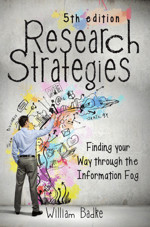
“This is a hard book to find. It’s out of print, I gather, so I could never find the Fourth Edition, but I did manage to somehow track down a PDF of the Third Edition, which had to suffice. It’s a solid, broad overview of the scholarly research process, from picking a topic, through doing the read,…”
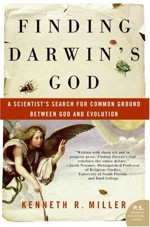
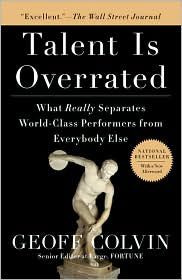
“So, this is actually a reread , even though I didn’t have any notes from back when I read it for the first time (probably in 2010 or so?). I do remember this was recommended to me by a guy I sat next to on a plane. He was reading the Bible, and we got into a discussion about that, then realized we…”
“incredibly well-researched look back at an obscure attempt to catalog scientific papers. Herbert Field was a man driven by a dream, but frustrated at every turn. This isn’t a success story, but it’s worth reading if you love library science or underdog stories. The ‘intrigue’ of the title is a…”
“incredibly dense book about library organization and cataloging systems. it’s good, but would take about three readings (with a group) to really plumb the depths of it. the key takeaway for me was: organizing information is often not perfect, and you have to make concessions to reality….”
“A book about how smart people are sometimes very stupid. Sometimes, we can be so smart and analytical that we outsmart ourselves, lose sight of the forest for the trees, and come full-circle back to stupid. One example is Arthur Conan-Doyle, the nominally brilliant author of Sherlock Holmes. He was…”
“Scary to comprehend how screwed we are if we have to rebuild. Lots and lots of science – perhaps too much, but that’s really the point. Redeems itself in the last chapter, when it explains that the greatest invention is science and measurement itself. We can’t investigate what we can’t measure, and…”
“This is a re-read for me. I originally read it 10 years ago, and it’s still amazing. Frances Collins was the head of the genome project. He led the team that mapped the human genome. He is also a Christian. He discusses the reconciliation of science and faith, and makes a compelling case that the…”
“I struggled with this book. The author admits that it’s about almost everything except a direct comparison of the legion and the phalanx. After a short introduction to ancient military tactics, it pretty quickly launches into a long history of ancient warfare and battles. About halfway through…”
“A solid look at how science works, and how the media and the public interpret it. The book can get depressing. Science is not exact. It’s vague, and sometimes not reproducible, and complicated to understand. The media tends to prey on this for headlines and clicks, and the public doesn’t know what…”
“This was a theory that devised a way the Second Law of Thermodynamics might be circumvented. That law says that heat energy cannot be created, it can only be transferred. In 1847, James Clerk Maxwell came up with this idea – Say you had a box with two sides, separated by a gate. A demon would watch…”
“ Wonderful little book that covers the philosophical basis of metadata. This isn’t a technical instruction manual. Rather, it talks about why metadata exists, what it is, and why it matters, which some more practical information tossed in. ”
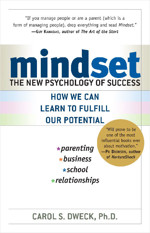
“The core point of this book is fantastic and wonderful: we are creatures of growth, and if we approach our lives with the mindset that we can change and are not fixed, then it will have a huge impact on our development and potential. That’s it – you could have written that in a blog post. But the…”
“This is about ‘information networks’ – the sources of information that humans use to understand their world. The author’s premise is that information is about connecting people, not necessarily communicating truth. We come together as communities through shared information. this information might…”
“This is really a coffee table book. I think I got it at Costco, but it’s beautifully bound with a cloth cover. I endeavored to read this, even though it’s not that readable – or even designed/intended to be read at all. I set my timer to one hour, and sat in a chair with nothing but the book….”
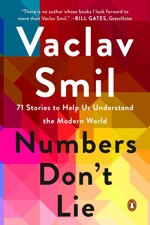
“Vaclav Smil is a scientist and policy analyst. His specialty is looking at societal problems and figuring out how science and policy should intersect to make it better. He taught environmental science at the University of Manitoba. Bill Gates has said several times that Smil is one of his favorite…”
“This book is undoubtedly interesting, but it’s a bit meandering. The basic idea is that…things (anything, apparently), ‘scale’ according to universal laws. Meaning, as something gets bigger, it grows less linearly along different axes, and this is a very predictable phenomenon. For example, an…”
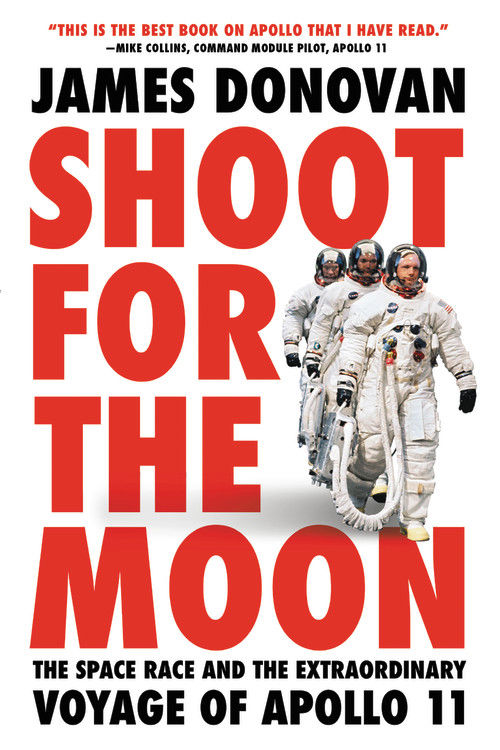
“I read this because NASA’s Artemis mission was in the news, and I felt kinda of guilty that I don’t follow space much. It’s poor geek cred, I know, but outside of childhood, I’ve just never been that interested in space exploration. But my brother got me to watch an Apollo 11 documentary , and it…”
“This is a good and practical book about teaching. It’s meant for school teachers, but I read it for tips on communicating ideas. The title refers to the scope of teaching – there are large-scale strategies to improving teaching across groups. But this book is about small teacher – how to improve…”
“This was a…nice book. I don’t think it was very ambitious, but it basically just explains why humans love stories. It does this from a few different angles: dreams, games, rationalizing, etc. I can’t really say that I learned a lot from this book. In large part, it was just kind of a confirmation…”
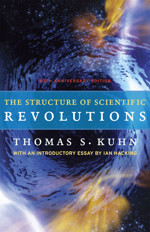
“This is a very famous book. It was written in 1962, then revised twice by the author, and then reissued on its 50th anniversary with a very long foreword (the author died in 1996). The book describes how science moves forward. According to the author, science exists in ‘paradigms,’ which are ways…”
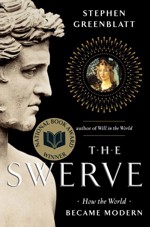
“This is a book about a poem. It follows a book-hunter in the 15th century named Poggio, while he manages to save the last remaining copy of On the Nature of Things by Lucretius, which is an explanation of Epicurean philosophy. The poem makes lot of secular claims. In the middle of the book, they’re…”
“I’ll be honest: I have no idea what this woman was talking about. I couldn’t make heads or tails of this book. It was promoted as a book to frame technology. That was an attractive idea to me, I guess. But what I read was a mess. Here are the chapter names: Systems Scale Legacy Matter Deviance…”
“I kind of thought this book was going to be about the scientific principle of gravity, and how we still don’t know what it is. Instead, the book is a long, tedious history of physics. It starts with a discussion about gravity in myth, legend, and religion, including the idea that heaven is ‘up…”
“An excellent look at how metrics can be used poorly to justify bad policies. Either we measure the wrong thing, measure it the wrong way, or – more often than not – game the measurement system so that we look better than we are. Want it to look like your city’s crime rate is going down? Stop taking…”
“Very simply, this is a measure of temperature that accounts for humidity. From an article entitled Why you need to worry about the ‘wet-bulb temperature’ : Wet-bulb temperature (WBT) combines dry air temperature (as you’d see on a thermometer) with humidity – in essence, it is a measure of…”