Unreasonable Hospitality: The Remarkable Power of Giving People More Than They Expect
TLDR: “Quite good”
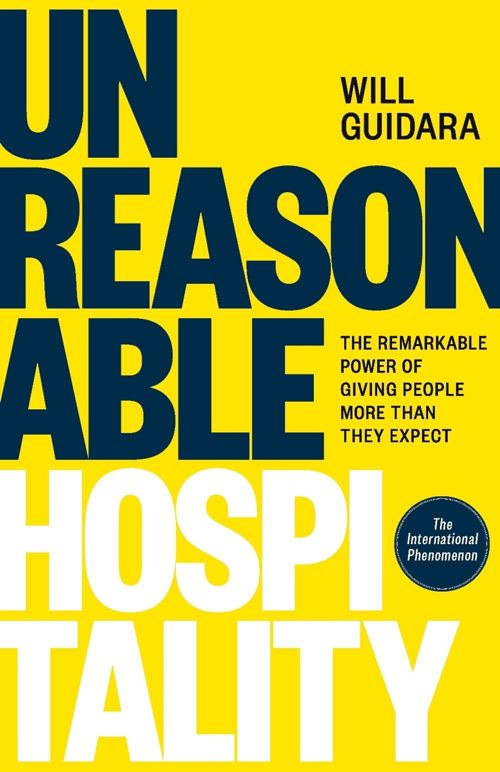
This is part memoir, part management advice. It’s the story of one man’s tenure managing a NYC restaurant called Eleven Madison Park, which climbed the ranks to be named Best Restaurant in the World.
Interestingly – and critical to the book – the author is not a chef. He was front-of-house – he managed the dining room. This book is about all the crazy things they did for their customers in the name of “unreasonable hospitality.”
Examples –
They overheard a customer saying they regretted not leaving NYC without getting a street hot dog. So they went and bought one, and delivered it to the table with gourmet presentation.
A customer panicked because they left a bottle of champagne in their home freezer when they left for the restaurant. They persuaded the customer to give them their house keys, sent someone to the house, retrieved the bottle and moved it to the fridge along with a tin of caviar, a box of chocolates, and a happy anniversary card from the restaurant.
A customer joked that he needed a million dollars for a business deal, rather than an after-dinner drink. So they delivered the drink accompanied by ten “100 Grand” candy bars.
And the list goes on. The culture at Eleven Madison Park was to go way over the top. They dissected their service in detail – what worked, what didn’t, what consequences were there, could they try something new, etc. They were (are?) always ready to change and evolve things.
Along with these details, the book gives a lot of general management and team-building advice. Most of it is pretty mainstream.
However, one thing stuck with me –
Identify moments that recur in your business, and build a tool kit your team can deploy without too much effort
They would find situations that came up again, like some questions:
- Who does your floral arrangements?
- Can you tell me more about the farm that made this cheese?
They created a card file with the answers, so that their customers could always feel like they were knowledgeable and they were never caught off-guard. They called this “systematizing improvisational hospitality,” which is oxymoronic (nothing “improvisational” is supposed to be “systematized”), but the idea was to seem improvisational, but be over-prepared.
Other examples –
If a customer had their luggage and mentioned catching a long flight, they had some “flight snack boxes” on hand to give them as they left.
If a customer ever joked about how they might be hungover in the morning, they sent them home with a “morning rescue kit” containing some ground coffee, Alka-Seltzer tablets, a muffin, and a fake doctor’s note recommending a day off.
They did something once, realized it could be “a thing,” and they systematized it.
They eventually created a position called “Dreamweaver” that they specifically hired for. This role was to look for opportunities to go over and above, and then see if they could (or needed to) systematize that, so it could be repeatable.
This is a critical business point, I think. Being adaptable is great, but what’s better is being able to identify those unique moments that might not be so unique, or that you might want to make less unique by lowering the bar to act on them.
The book is full of “inside baseball” about the restaurant business, which I found fascinating, but it tries to be more general by setting up the idea that unreasonable hospitality can be used in any industry where you want to leave an impression on a customer. The idea is to imagine what that specific customer might need or want and go out of your way to make that happen.
It’s a good book. Even if you don’t have anything to do with hospitality, it’s interesting and there’s a lot to learn here, for any discipline.
Book Data
- Author
- Will Guidara
- Year
- Acquired
- Not recorded
- Open Library
- OL27245328W
- I have read this book. According to my records, I completed it on .
- I own (or have license to) an electronic copy of this book.