Uncomfortable Conversations with a Jew
TLDR: “Great content in an annoying-ish format”
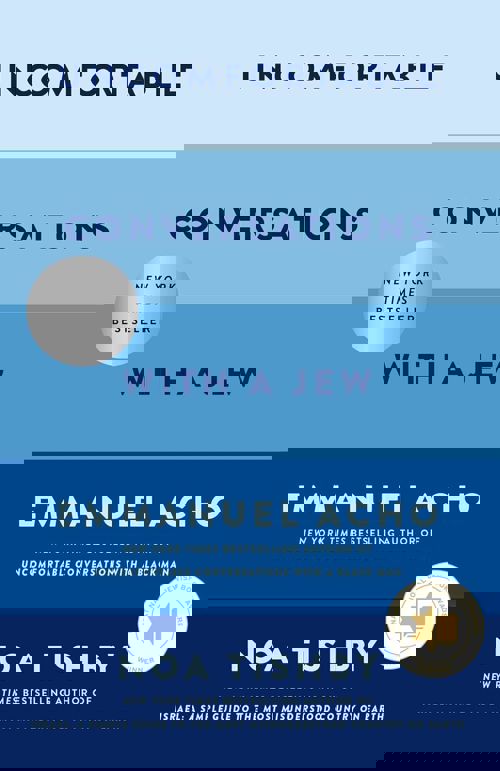
Let’s get the format out of the way: this book is presented as a conversation between a Christian Black man and a Jewish woman. The man is a sportscaster and the woman is a Jewish activist. It is supposedly their dialectical about the struggles of being Jewish in the world today. Some years ago, the man wrote a similar book about being Black. (Also, his brother wrote this book about Christian faith.)
I didn’t like the format. It seemed contrived and even cringey in places. I have no illusions that these two people actually had this conversation or said these things.
But, besides that, it’s a good book.
It covers Judaism from the very basics, starting with, What is a Jew? It talks about the trends and vibe of the Jewish religion, and the intersection between Judaism and race, including the sticky question of whether or not Jewish people are “White.” (It’s complicated, it turns out. People claim Jews are White or not White depending on the point they want to make.)
The gist: being a Jew is not a race or ethnicity, but, clearly, Jewish people do tend to cluster in several ethnicities and racial backgrounds, simply based on where Judaism is popular as a religion. This is the same reason that Christians tend to be White because Christianity is the dominant faith in areas where lots of White people live.
I found the book most interesting when it discussed the sources of Jewish stereotypes and discrimination. I’ve been interested in The Greedy Jewish Moneylender Stereotype for a while (see also: The Money Kings). It turns out that my discussion in that article was pretty spot-on (re: the loaning of money between faiths), but Jews also trended towards banking and retail because they weren’t allowed to own property or work in factories, which I wasn’t aware of.
She also pointed me to Exodus 34:29, which describes Moses after he received the Ten Commandments. It says (KJV):
…when he came down from the mount, that Moses wist not that the skin of his face shone while he talked with him.
Apparently, a Catholic translator back in 400 AD translated “shone” (as in “glowed”) as “grew horns.” This kick-started the idea that the Jews were somehow in league with the Devil. It also segued into the stereotype of the hooked Jewish nose, assisted by a sketch in 1233 showing the Devil tapping a Jew on the nose, described in this commentary:
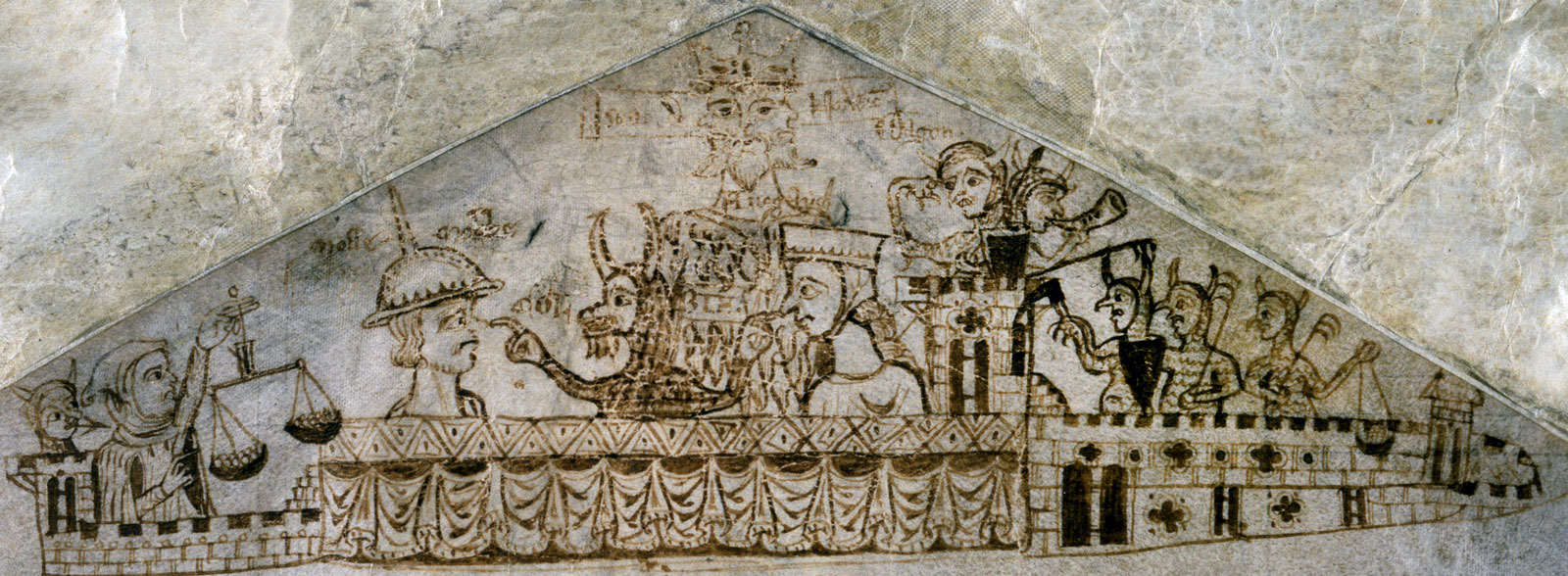
The earliest known anti-Jewish caricature is a sketch – actually, an elaborate doodle – in the upper margin of an English royal tax record from 1233. It shows three bizarre-looking Jews standing inside a schematic castle, which is being attacked by a host of cartoonish horned, beak-nosed demons. Another, larger demon in the center of the castle tweaks the freakishly long noses of two of the Jews, as if to underscore the resemblance between their profiles and his own.
The authors dig into the idea that Jews have a lot of power and control the world. There’s an interesting passage where the Black author recounts how all the powerful people in his life are Jewish. He’s in the entertainment industry, and almost every agent and person of power in his industry are Jewish. Additionally, he was an NFL player, briefly, and the owners of both the teams he played for were Jewish, as were the general managers.
This comes back to the aforementioned reasons why Jews drifted into banking, finance, retail, law, etc. They were forced into certain industries – including entertainment, or “Hollywood” – because they were barred from others. Their success in those industries tended to make them wealthy, and in today’s world, wealth is power.
Essentially, prejudice pushed Jews away from “real jobs” like farming and manufacturing. Consequently, they drifted into … “managerial jobs” (?), and, ironically, the Industrial Revolution then marginalized the “real jobs” and made the managerial jobs very powerful.
Add to this the natural tendency for marginalized communities to be insular and over-achieving (see The Triple Package), and the natural tendency of sour grapes and envy, and you get a perfect incubator for antisemitism.
The book was written just after the October 7 attacks. There is some drama between the two authors because the Black man had a Palestinian activist on his podcast… or something. I didn’t quite follow that, but the two authors had a big falling out which almost ended the project.
This is related to a long discussion of the Holocaust and the case for Israel and its right to exist, and then naturally into the concept of Zionism and whether or not you can be anti-Zionist without being antisemitic.
The Jewish author says there’s a three-pronged test for anti-semitism:
- Does your statement generalize something to all Jews?
- Does your statement use stereotypes?
- Does your statement blame the simple existence of Israel, rather than specific policies of the Israeli government?
She also makes a very interesting comparison to Pakistan.
- Both countries were decolonized from Britain
- Both were created as safe haven for persecuted groups (Pakistan was meant to protect Indian Muslims)
- Both have frequent land disputes
- Both control religious sites of other faiths
- Both were created at about the same time
Very few people outside that specific region complain about Pakistan. Yet, everyone seemingly has a position and opinion about Israel.
As I said, this is a good book with a lot of good information. I didn’t love the format, but I’m wondering if maybe I found it engaging anyway? I seemed to really connect with the book and got a lot out of it, and maybe that’s because of the format? If the book was written more traditionally (by only the Jewish author, because she’s 85% of the content, really), would it have held my interest the same way? I don’t know.
Book Info
- Author
- Emmanuel Acho, Noa Tishby
- Year
- Pages
- 320
- Acquired
- I have read this book. According to my records, I completed it on .
- A softcover copy of this book is currently in my home library.