From Strength to Strength: Finding Success, Happiness, and Deep Purpose in the Second Half of Life
TLDR: “A transformational thought, for people in the right stage of life”
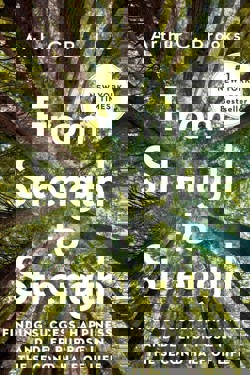
Here’s the basic idea –
When we’re young, we have what’s called “fluid intelligence.” We’re energetic, creative, and not weighed down by old thinking and prejudices.
But, as we get older, our thinking moves to “crystallized intelligence.” Basically, we get wise. At this point, we have wisdom – lots of “old thinking,” but also the experience to put it context.
When we’re young, our way of thinking is our strength. And when we’re older, our way of thinking is our strength. Ideally, we recognize that both of those strengths matter, for different reasons.
The problem is, some people don’t transition. They continue to perform the second half of their lives and careers with the same way of thinking that they had earlier, and it doesn’t work. The author documents dozens of people who never made the jump from one strength to another.
The author statistically demonstrates that different careers peak in different ways, and we need to evolve with our way of thinking. In our later years, we should modify our careers and goals to match our strengths. Some people don’t – they try to recreate past glories – and they spend the second half of their lives continually frustrated that they’re not young anymore.
It’s a great thought, and really timely for me. I’m very much on the downward curve of the first strength, and I need to modify my career for the second curve.
The book gets a little spiritual and preachy at the end. It’s not advertised as a spiritual book, so that part kind of comes out of nowhere – I could see some secular readers getting annoyed with it. He also loses focus at the end. The book segues into more of a general self-help title, which I wasn’t ready for.
But, still – a great thought that really fits my life at the moment. The book came at just the right time for me.
Reread
Added on
I re-read this for the third time. The very first time, I listened to the audiobook. The second time, I read the hardcover. This time, I re-read the physical book, highlighter in hand.
The main point of each chapter –
Chapter 1: Your Professional Decline is Coming
Just what the title says: lots of very famous people have declined precipitously in their later years. He uses Charles Darwin as an example: after The Origin of Species, he never got back to that level. Lots of people try to reclaim past glories in middle age, and when they fail, they spend the rest of their lives frustrated and bitter.
Chapter 2: The Second Curve
What happens later in life is that our intelligence moves from fluid to crystallized. Simply put: we become wise. Our value is less in our energy and creativity, and more in our experience and ability to put that to use.
When you are young, you have raw smarts; when you are old, you have wisdom. When you are young, you can generate lots of facts; when you are old, you know what they mean and how to use them.
He calls this “the second curve” (which sounds eerily like David Brooks and The Second Mountain). As the achievements of our youth and our fluid intelligence curve downward, the potential of our advancing age and our crystallized intelligence begin to curve upward.
Chapter 3: Kick Your Success Addiction
When we become successful, we tend to get addicted to it. He quotes a woman he interviewed:
Maybe I would prefer to be special rather than happy.
This is an “objectification” of ourselves. We look at ourselves as “success objects” rather than fully-formed people.
Chapter 4: Start Chipping Away
We need to break the addiction that “more = happier.” We need to start taking things away in order to be happier, rather than adding things.
I loved this quote from the author:
My happiest days are those that start out like an empty canvas, waiting to filled up with ideas and creative interactions.
I can absolutely relate to that. An empty Saturday is one of my greatest joys.
This chapter is also when the author starts drifting into a bit of spirituality. He quotes Buddha a bit in here.
Chapter 5: Ponder Your Death
Just as the title says: you need to acknowledge that your live will end, and you need to start figuring out what it’s going to take for it to be meaningful when it’s over.
He talks about:
- Resume Virtues: stuff that matters while we’re alive
- Eulogy Virtues: stuff that people will remember us for
The former declines as we get older. The latter has the potential to increase.
Chapter 6: Cultivate Your Aspen Grove
A grove of aspen trees, it turns out, is connected at the root level. You can look at a single tree and think it’s alone, but they invariably have huge, interconnected root systems that connect them all underground (see Pando Aspen Forest).
As we get older, relationships become so much more important. We need to start looking at ourselves as someone who draws strength from how they are connected to other people.
Chapter 7: Start Your Vanaprastha
The author goes quite a bit deeper in spirituality in this chapter. “Vanaspratha” is a Sanskrit word meaning the final stage of life when you –
[…] purposely begin to pull back from our [your] old personal and professional duties, becoming more and more devoted to spirituality and deep wisdom, crystallized intelligence, teaching, and faith.
The author talks about how is natural for our faith to increase in this stage of our life. As we contemplate our mortality, we need to figure out what life means to us and how we fit into the big picture of the universe.
The solution here is to stop seeing our spiritual development as a side interest but rather to put it front and center.
Chapter 8: Make Your Weakness Your Strength
This is kind of a conclusion of sorts. It’s a shorter chapter, with the message that our curve downward can be source of connection with other people.
When you use your weakness to connect with others, love in your life with grow. And finally – finally – you will be able to relax without worrying about being exposed as less than people think you are.
He tells the genuinely inspirational story of Beethoven, who began to lose his hearing in his 30s. Rather the fighting this and becoming bitter about losing, he embraced it, and did some of his greatest work after losing his hearing, and perhaps even because of losing his hearing.
Chapter 9: Cast into the Falling Tide
This is another extended conclusion.
We naturally fear life transitions but we need to embrace the instability that goes along with it.
Conclusion: Seven Words to Remember
The words are: “Use things. Love people. Worship the divine.”
Book Data
- Author
- Arthur C. Brooks
- Year
- Pages
- 272
- Acquired
- Not recorded
- Open Library
- OL25483602W
- I have read this book. According to my records, I completed it on .
- A hardcover copy of this book is currently in my home library.