The PARA Method: Simplify, Organize, and Master Your Digital Life
TLDR: “Practical guidance, well-presented”
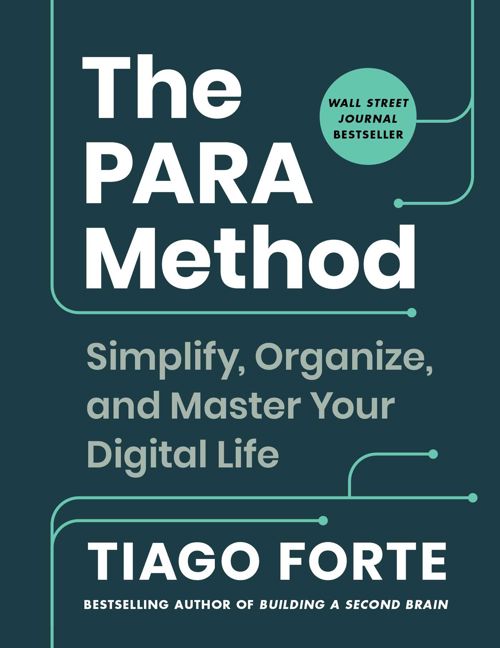
I read Tiago Forte’s Building a Second Brain some time ago, and I remember it being a little underwhelming. It might have been because it was an entire trade-length book about a very simple concept.
This book is better, because it’s much shorter and concentrates on a very basic method. It claims we should organize our stuff in four buckets:
- Projects: stuff we’re doing that has a destination
- Areas: stuff we need to keep track of on an ongoing basis for a program or some other responsibility we manage
- Resources: stuff we might need to refer to at some point in the future
- Archives: stuff that no longer fits one of the above categories
Hence: “PARA”: projects, areas, resources, archives.
I haven’t implemented it, so I can’t say if it works or not, but it seems logical. It’s essentially a decreasing order of specificity. Projects are very focused, areas less so, resources even less so, and archives is a big bucket. In fact, later in the book he explicitly labels them “most actionable” (projects), “occasionally actionable” (areas), “actionable when needed” (resources), and “least actionable” (archives).
Forte does a good job of helping people distinguish between projects and areas. Basically: does it have a defined end or goal? If it does, then it’s a project. If it doesn’t – meaning, it’s just something to have maintain some level of performance area, forever – then it’s an area.
Also, he stresses the need for a “Project List.” Most people can’t produce this. We have to do lists, which are tasks we need to get done. But few people have a list of projects that involve the completion of multiple tasks toward an end goal.
I’m absolutely guilty of not having this, and I often thing it’s because the idea of it scares me. If I were to write down everything I need to do over time, the stress would be remarkable. It’s like people who are in debt that avoid knowing what their balances are – you know that debt is out there, and you know it’s bad, but you don’t want to know the specifics, because that would make you feel worse.
The book is… casual. Forte provides lots of ways that you might modify the system, and he presents PARA as non-exacting. He just wants you to do something, rather than stay disorganized all the time. At points in the point, he’s just trying to drill things down to the absolute most simple thing you could possibly do.
This is demonstrated in the “three habits” he claims are critical to maintaining a PARA system:
- Organize according to outcomes
- Organize just in time
- Keep things informal
And later on, he gives the ultimate casual advice: “When in doubt, just start over.”
I liked it. The format is good too – it’s kind of artistic little book, with very short chapters, large font, two-colors, pull quotes on entire pages, etc. That makes it approachable, which is half the challenge with these things.
I am going to take a run at PARA, in some form. I like the segregation of it. It feels reasonable.
Book Info
- Author
- Tiago Forte
- Year
- Pages
- 208
- Acquired
- I have read this book. According to my records, I completed it on .
- A hardcover copy of this book is currently in my home library.