Get the Picture: A Mind-Bending Journey among the Inspired Artists and Obsessive Art Fiends Who Taught Me How to See
TLDR: “Compelling and well-written”
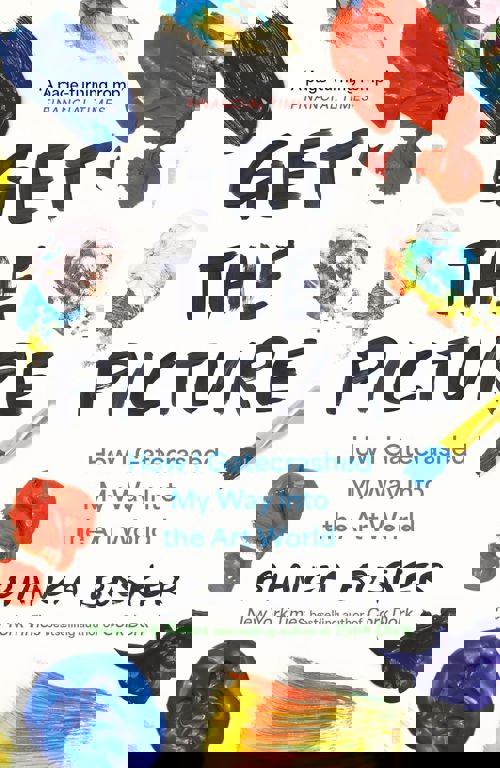
This is the from the same author that wrote Cork Dork: A Wine-Fueled Adventure Among the Obsessive Sommeliers, Big Bottle Hunters, and Rogue Scientists Who Taught Me to Live for Taste. Bianca Bosker is developing a track record of someone who immerses herself in a subculture and tries to figure it out from the inside.
This book is about the art world. Specifically, the “contemporary art” world (which, I learned, is newer than “modern art” – the modern art era ended in the 70s). To try and figure it all out, Bosker embarks on a series of journeys:
She becomes a gallery assistant, twice. Once at a small gallery in Brooklyn, where she gets abused a little, and once at a larger gallery in Manhattan where she becomes an assistant director and works a large art festival in Miami
She takes a detour into performance art, with a woman who sits on people’s faces (not a typo)
She becomes a studio assistant to a semi-famous contemporary artist
She becomes a docent at the Guggenheim museum ion NYC
She follows two Instagram-famous art collectors from North Dakota (“the Icy Gays,” they call themselves) around a show while they select and buy art
All throughout, Bosker keeps asking herself: What is art? Why do people like the things they like?
Like wine, art is the “anti-math.” Mathematics is a simple, objective discipline where things are as they seem and there’s pretty much always a right answer to everything.
But there are no “right” answers in art. Things are the way they are because someone says they should be. And what one person says, might not be what another person says. Art is the supreme stronghold of the personal opinion.
…or is it?
What Bosker finds is that there’s something like a “deep state” in the contemporary art world. There are movers and shakers and a very tight social network – centered in NYC – that tends to drive opinions. There are “The Heads,” which are a shadowy network of gallerists, museum directors, collectors, and other elite that tend to make or break the really famous artists. Bosker never uncovers an actual secret society or anything, but there’s a pervasiveness sense of string-pulling all throughout the book. Someone – or some group of someones – drives influence in the art world.
Related to all this, Bosker discovers the power of “context.” This is the conversation about the art or the artist – the “buzz,” if you will. To “break out” in the art world, you have to have the right context. The right people need to talk about you in the right ways. You need to have the right story. When someone is “explaining” a painting to someone else at a party, they need to have some depth of interesting anecdotes to tell about the artist’s history or thought process or whatever.
As it turns out, fame in the art world is never just about the art. It’s about market positioning and story telling. The exact same painting can be noticed or ignored by The Heads and everyone else because it has or doesn’t have great context.
So, there are two sides to art: what does the market thinks of it, which is separate from what you think of it.
For the latter, Bosker digs into the science of visual comprehension and color constancy. She comes to the conclusion that we ignore more of what’s around us. We just don’t stop to see things anymore, and this is one of the things that art does: it forces us to see something, sometimes by simply excluded everything else.
As a docent at the Guggenheim, Bosker contemplates how long people look at art. She comes to understand that you really have to stare at art for a long time. In doing so, you come to see things that you never would have otherwise.
Throughout the book, she sort of pokes fun at the phrase “makes the familiar unfamiliar,” which is something of a cliche in art showing press releases. But, in the end, she decides that this is pretty accurate: one of the the tricks of art is to show someone something they think they know (the “familiar”) and get them to understand it in a new way (the “unfamiliar”).
…or at least that’s one trick of art. In the end, I think Bosker just comes to the conclusion that art is self-justifying. Humans have loved art for thousands of years, and do we really need to spend a lot of time asking why?
I have my fingers crossed that Bosker writes about the fashion world next. Paging Miranda Priestly…
Book Data
- Author
- Bianca Bosker
- Year
- Pages
- 384
- Acquired
- Not recorded
- Open Library
- OL37628790W
- I have read this book. According to my records, I completed it on .
- A hardcover copy of this book is currently in my home library.