Cracking the Genome: Inside the Race to Unlock Human DNA
TLDR: “Good, but a little tedious, and maybe dated”
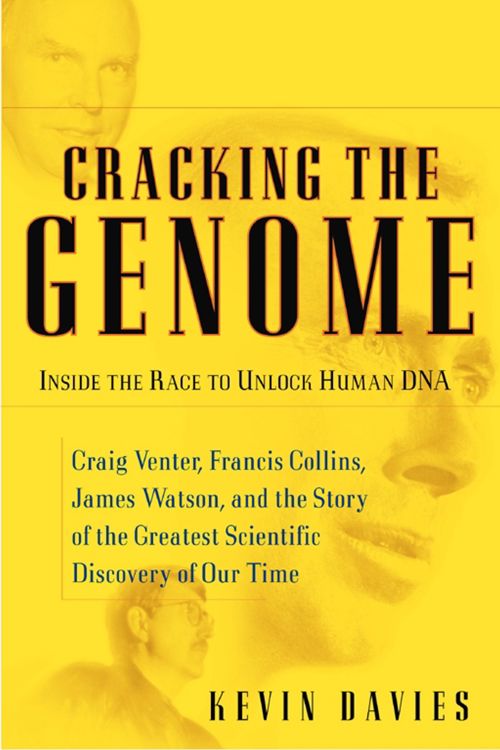
I read this because I’m a fan of Francis Collins, who is the current head of the NIH, a devout Christian, and who wrote one of my favorite books about faith: The Language of God.
This is the story of the Human Genome Project, which was something I was only vaguely aware of. I’ve never been particularly good at science, especially the “hard” sciences, so I only kinda sorta knew what this was about.
Just to recap and ensure my own understanding, here’s what I learned –
Human DNA is essentially a long string (like, 3 billion) of four letters. These letters represent something called “bases”. These letters basically form a big instruction manual of how to order amino acids to build proteins. Your body is constantly using this manual to rebuild itself.
This long string of letters is divided into substrings called “chromosomes.” We all have 46 of them – 23 from each of our parents.
Within the chromosomes are smaller substrings called “genes.” The genes are just sections of the longer chromosome, surrounded by what used to be called “junk DNA,” but is basically just information for which we don’t know its purpose. A very small percentage of the total DNA bases are identifiable genes – maybe 1-2%,
Each gene does… something. We don’t know what they all do, but we’ve identified many that control very specific protein formation to which we can trace diseases and genetic traits.
DNA replicates constantly, and sometimes it makes mistakes. These mutations accrue over time, and this leads to disorders of aging, where the body’s “instructions” get less and less accurate. Other outside forces – like radiation – can damage DNA, meaning our body is trying to rebuild itself from faulty instructions.
The Human Genome Project was a successful attempt to map the entire string of DNA – determine the correct sequence of all the bases in every chromosome. By having this “master instruction manual,” we can now identify specific genes (subsections of the entire DNA string), and determine what those genes do. By identifying specific genes responsible for specific conditions, we can perform more accurate research to find ways to treat those conditions.
DNA was discovered in the 1950s, so it was 40 years later that the scientific community decided to make a map of it all. The project was started by the NIH, but one of the researchers eventually broke off and started a private company because he found a way to do it faster. This led to a lot of acrimony, but the two sides eventually reunited to complete the project.
The book spends quite a bit of time on the intellectual property aspects of genes. Companies who “discovered” a gene – meaning, they identified the specific sequence of DNA that comprised that gene – attempted to make a legal claim to it, so that other companies had to pay them to use it in research. This caused quite a bit of outrage, since DNA already exists and these people didn’t “create” anything, they just identified something that was already there – literally something that lives inside every human.
The book was written in 2001, which means it was before the landmark 2013 Supreme Court decision that invalidated most gene patents. The Supreme Court ruled that:
a naturally occurring DNA segment is a product of nature and not patent eligible merely because it has been isolated
However, the court did allow for “complementary DNA,” which was the practice of identifying genes then removing all the junk DNA to effectively create something new.
The book is necessarily tedious – if you weren’t looking for something that goes deep into scientific minutiae, then you probably shouldn’t have picked up this book in the first place.
I enjoyed it. It prompted me to do a lot of research and fill in gaps in my knowledge.
(And, energized by my newfound knowledge, I immediately decided to read Jurassic Park which is pure fantasy from a scientific perspective, but kinda matched the theme.)
Book Data
- Author
- Kevin Davies
- Year
- Pages
- 251
- Acquired
- Not recorded
- Open Library
- OL2561223W
- I have read this book. According to my records, I completed it on .
- A hardcover copy of this book is currently in my home library.