Why Hackers Win: Power and Disruption in the Network Society
TLDR: “Competent, but lacking much of a point”
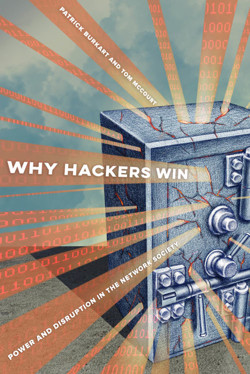
I’m not totally sure why this book was written. I can’t quite figure out the point.
I especially take issue with the title. I don’t feel like they ever really supported that.
The authors are both communication professors, and the book has a very academic air about it. It’s a broad survey of the concept of hacking. They start with a very academic definition of it, then discuss it as an economic and political tool, with some discussion of anti-hacking laws and the idea of “hacktivism” – hacking as a tool for social justice.
The authors know a lot, clearly, but the book never seems to break out of the pretension of academia. I feel like this started life as an academic paper of some kind, and the university publisher persuaded them to make it into a book, and then gave it a snazzy title to try to get it to sell.
(Indeed, I bought it because the title brought up a question that I assumed would be answered.)
I kept waiting for some definitive statement about “why hackers win,” and I never got it. Rather, it was just a general discussion about hacking as a concept, with emphasis on government attempts to control it and make it illegal.
That said, it’s short – about 135 pages, without notes – so not a huge investment of time.
Book Data
- Author
- Patrick Burkart, Tom McCourt
- Year
- Pages
- 224
- Acquired
- Not recorded
- Open Library
- OL21211869W
- I have read this book. According to my records, I completed it on .
- A softcover copy of this book is currently in my home library.