Five Days at Memorial: Life and Death in a Storm-Ravaged Hospital
TLDR: “A little tedious, but still interesting”
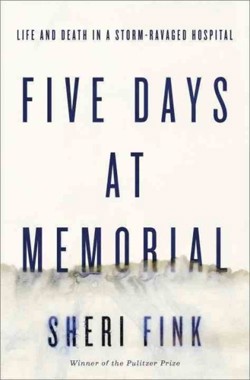
This is a story of a New Orleans hospital during Hurricane Katrina. It lost power, was surrounded by water with backed-up sewers, and there weren’t enough boats or helicopters to evacuate everyone. Lots of people died. Maybe too many people.
When the hospital lost power, all the ventilators shut off. A lot of patients were in immediate distress, compounded by the 110-degree indoor temps and the humidity. Conditions in the hospital deteriorated sharply. There wasn’t enough equipment or people to serve everyone, and without power, many of the patients had little to no chance of surviving.
What happened next is the big question. The District Attorney maintains that a doctor named Anna Pou and two nurses entered the rooms of several doomed patients – many with standing Do Not Resuscitate (DNR) orders – and knowingly injected them with enough morphine to kill them.
But did they? There were 45 bodies at Memorial – stacked up in a makeshift morgue in the chapel – and a very high percentage of them tested positive for morphine, even though the patients were not prescribed the drug. It was clear that they were administered morphine, but was it to kill them, or just ease their suffering while they died naturally?
There were three people in the various rooms when it happened, and they have steadfastly refused to say what happened, assuming they even agree on what their individual intentions were. Before they entered the rooms, there had been fleeting discussions and fragmentary conversations between multiple people about the possibility of euthanizing patients. It was an idea that was apparently floating around in the heads of a lot of people during the crisis.
If they did intend to euthanize patients, would it have been the right decision? How many of the patients were days or even hours away from dying anyway – even under normal conditions – and the injections just gave them relief in their final hours? And did the conditions the hospital was operating under at the time justify any of this?
The book is divided into two parts. The first is a tight narrative describing what happened at Memorial during Katrina. The second part covers a few years afterwards when people are investigated, arrested, and charged with crimes. (If you want to know what happened, here’s a Wikipedia page which explains it all.)
The book ends with an extended epilogue about efforts in the last decade to define how medical professionals should act in situations like what happened with Katrina, when medical support starts failing and decisions have to be made about who receives the limited care available, and who is evacuated first when capacity is limited.
This is the second book I’ve read about Katrina (after The Great Deluge). It gets a little tedious in places – there are lots of names and locations, to the point where there’s a map of the hospital in the front of the book.
Still, a solid read.
Book Data
- Author
- Sheri Fink
- Year
- Pages
- 558
- Acquired
- Not recorded
- Open Library
- OL16810887W
- Wikipedia
- Five_Days_at_Memorial
- I have read this book. According to my records, I completed it on .
- A hardcover copy of this book is currently in my home library.