Air Wars: The Global Combat Between Airbus and Boeing
TLDR: “A bit tedious, written from a very low-level”
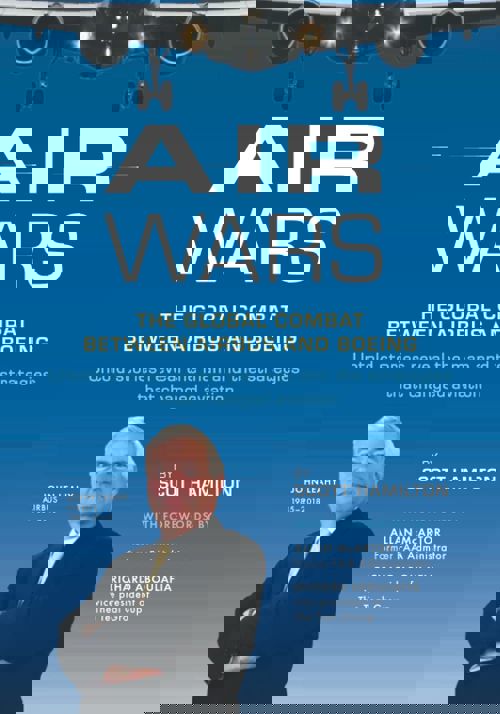
This book was written by an airline journalist, and it shows. It’s very low-level – a sometimes bewildering recitation of deals and maneuverings by the two biggest aircraft manufacturers in the world: Boeing and Airbus. It’s like if every news article ever written about them were bundled up into a book.
What’s missing is any larger context of how the aircraft business works, which is what I think I was looking for. I’m quite interested in air travel as an economic system. I think I was looking for lessons in how the business works, and that’s not what this is.
What I was struck by, however, was all the levels of influence that the air travel industry has to deal with. There are so many groups applying force:
- The airframe manufacturers
- The engine manufacturers (engines on planes are like tires on a car; the manufacturer buys and installs them from someone else)
- The airlines, both passenger and freight
- The leasing companies, which buy a lot of aircraft and lease them out
- The manufacturing labor unions
- The operation labor unions (pilots, flight attendants, etc.)
- The airports and their legal authorities
- The various regulatory agencies, for each country
- The International Civil Aviation Organization, a division of the United Nations based in Montreal which provides international air travel standards
- The parts manufacturers and their supply chains
- The investors
- The aircraft industry press
- The air freight shipping customers
- And, finally the air traveling public
Any decision is a process of threading the needle and trying to make everyone happy, or at least trying to anger the least number of them.
Also, in the chapter on the Airbus A380 was something for which I’ve been searching for a while: a list of why the A380 failed.
Opinions differ –
It was just a bad business decision. The plane only made sense if it could be filled, and the A380 has a lot of seats to fill. They could rarely be flown at capacity.
There are rumors that Boeing goaded Airbus into the A380. Boeing knew it was a bad decision, so they feigned interest in building a new version of the 747, which prompted Airbus to counter with the A380. When Airbus couldn’t back out, Boeing abandoned the new 747 plans, and rumors persist that it never planned to follow through on them anyway.
It was born with bad engines. Rolls Royce provided engines that required a four-engine configuration, whereas right around the corner were better engines that worked with only two of them. The 787 benefited from these better engines. The CEO of Airbus at the time remains bitter about this today – he maintains that Rolls Royce was negligent in failing to predict the evolution of the engine market.
The air travel industry was changing, or it didn’t change the way Airbus predicted. The industry that greeted the introduction of the A380 just wasn’t what was needed to sustain it.
SARS and then the 2008 financial crisis damaging the economy at a critical time in the aircraft’s introduction.
The book is a lot of “inside baseball.” The author has spent decades deep in the aircraft industry, and the altitude (no pun intended) was just a bit wrong. I needed it to be higher – I needed it to explain more clearly the forces that impact the aircraft industry. I think that’s what I really wanted.
Book Info
- Author
- Scott Hamilton
- Year
- Pages
- 272
- Acquired
- I have read this book. According to my records, I completed it on .
- A softcover copy of this book is currently in my home library.